
The Spearhead Traverse in a Day
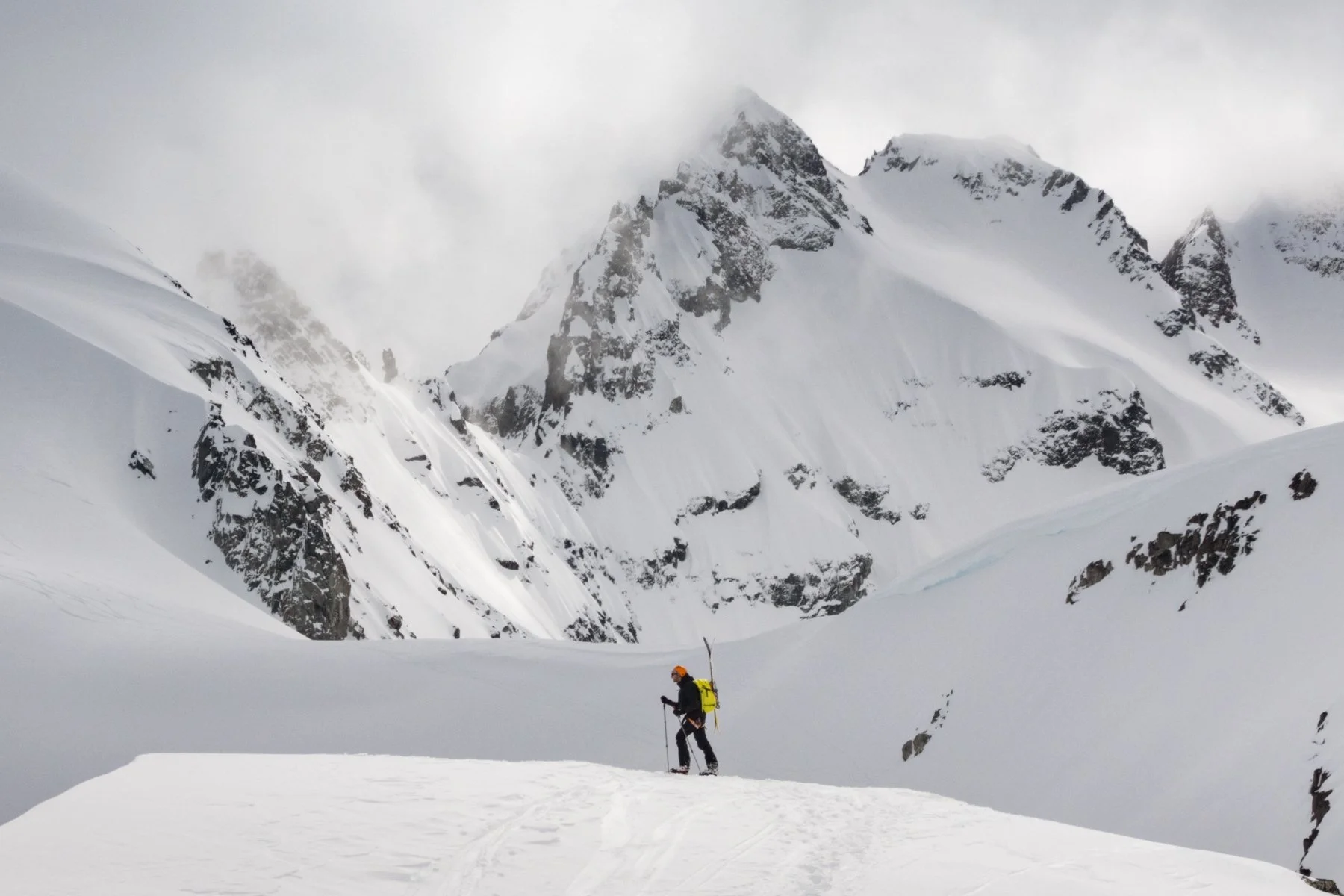
Booting in front of Mt Fitzsimmons
DATES SKIED: 4/17/26
TOTAL MILEAGE: 24.5 MILES
TOTAL ELEVATION GAIN: 7,800’
The Spearhead Traverse is a route I learned about shortly after getting into backcountry skiing in 2018. It is regarded as one of the most scenic traverses in Canada and has been referred to as the “Haute Route” of North America. The route connects Blackcomb to Whistler by way of a meandering traverse that crosses 11 glaciers, winds around 17 peaks, and travels through some of the most spectacular alpine terrain. It’s about 21 miles, give or take the exact variation one chooses (and there is no shortage of variations from which to choose), and about 5,600’ of gain if you exit via the standard Singing Pass route. Oh, and it also requires at least 21 transitions. It’s no small undertaking physically or technically, so I kept this route in the back of my mind as I accumulated more experience in glacier travel, reading terrain, navigating, and improving my endurance these past few years.
After Sander and I had a successful trip to Garibaldi in early April, we caught the Canada bug. Lucky for us, British Columbia was once again looking favorable for the weekend of April 17th. After years of not feeling up for the challenge, this season I finally felt ready to attempt the Spearhead. Sander was also on board so we headed back north for another huge spring ski trip.
The day we planned to attempt the Spearhead was forecasted to be clear and calm, but the few days that preceded our trip once again brought snow. Unlike the calm conditions that accompanied the snow before our Garibaldi trip, this snow was ushered in on fierce winds. Unfortunately, wind slabs and storm slabs were avalanche concerns in two to three days leading up to our trip. During this time, I kept a watchful eye on the Avalanche Canada site and South Coast Touring Facebook pages to see if any trip reports trickled in. Avalanche Canada had rated the Whistler/Blackcomb zone at a moderate (2 rating) the day before our trip and the day of our trip, but a 2 rating isn’t a green light, we still needed to stay on our toes and remain wary of the terrain.
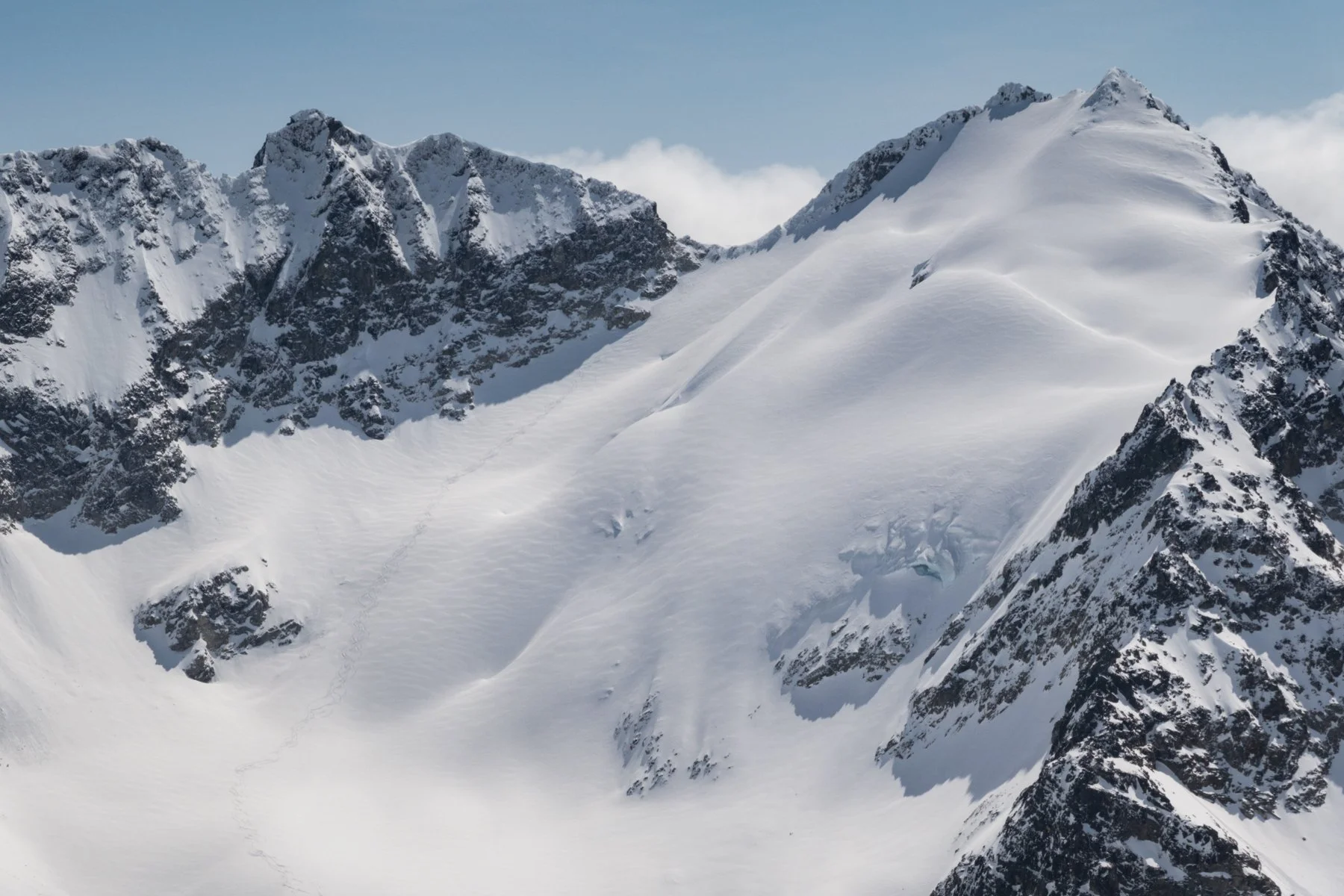
Dreamy tracks on Mt Macbeth (the Spearhead goes past Mt Macbeth, but these tracks are a bonus mission)
We decided to take advantage of shoulder season prices and rented a hotel room in Whistler for Thursday and Friday night. This meant after our traverse we could come back and crash in the hotel room without worrying about driving anywhere exhausted. We took Friday off work and drove up to Whistler on Thursday evening.
As we made the drive to Canada, I checked online and was happy to see a few trip reports had trickled in, but my excitement was short lived. They were not encouraging trip reports. In both the Whistler and the Pemberton areas, skiers reported very reactive snow and “little wind slabs all over.” I was disappointed. The Spearhead Traverse is so big and so committing that you kind of need all the conditions to be perfect. Sander and I discussed our options. These included skiing at the resort on Friday and waiting until Saturday to attempt the Spearhead or attempting the Spearhead as intended, continuously assessing conditions along the way and turning back if we saw any sign of instability in the snow. After much deliberation, we decided to go for it with the mindset that we would turn back at the first sign of instability. We finished packing our gear and set our alarms for 6:30AM.
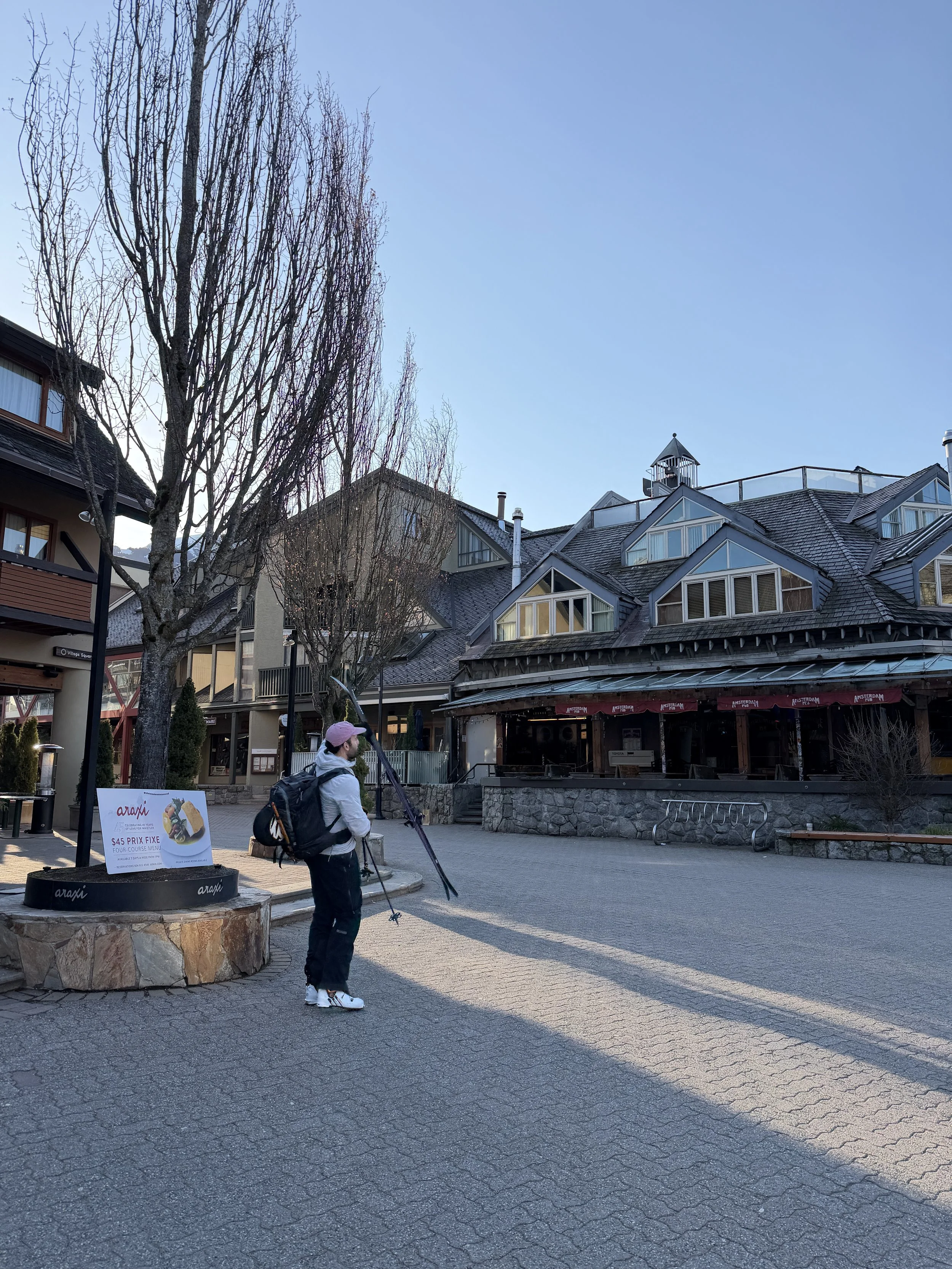
An empty Whistler Village before the resort opened
While much stronger people than me can skin from the resort’s base and complete the route fully human-powered, we chose to access the Blackcomb backcountry using the gondola. This meant we needed to wait until the resort opened and the chairs started spinning. This also meant we had a relatively leisurely start to the day, which is a novelty for big spring ski tours.
The gondola had no line (another win for shoulder season), and we boarded it shortly after it started spinning. On the ride up the mountain, we had a bird’s-eye view of just how little snow was left on the lower mountain. Narrow ribbons of snow trailed down the mountain, harvested and pushed into place by snow cats to allow for continuous skiing to the base, at least for the time being. It was actually closing weekend for Whistler. This was one of the primary reasons I wanted to attempt the Spearhead earlier in April rather than later. When Whistler is open, skiers can exit the traverse by skiing out on freshly groomed cat tracks. Once the resort closes and begins prepping for mountain bike season, they quit grooming the runs and the exit becomes much dicier.
From the top of the gondola we skied a firm Jersey Cream run to the Glacier Creek Lodge and waited for the Glacier Express lift to start spinning. And we waited. The morning was a “hurry up and wait” situation. With such a long day ahead of us, this made me anxious. We asked the Glacier Express liftie if he thought the lift and T-bar would be running soon. He gave us a shrug and said, “maybe in 20 to 25 minutes”. The 7th Heaven lift was already running and a few other skiers who were eagerly waiting to start the Spearhead told us they were heading that way. They planned to hike the ridge toward Horstman Hut and drop into the Showcase Bowl.
I had briefly read about this entrance to the Blackcomb backcountry before, but hadn’t done much research on it. Feeling pressed for time, Sander and I followed them to 7th Heaven.
From the top of the lift, we hiked along the ridge and were dismayed to see skiers loading the T-bar far below us. We could have waited! It actually turned out the Horstman hike was the better option for us. We dropped into the Showcase Bowl from above and were able to quickly ski all the way to the Blackcomb backcountry gate (as opposed to hiking up from the T-Bar and then traversing the bowl), so we arrived ahead of most of the people who took the T-bar. We also ran into two men on our hike who gave us helpful information. First, they told us their friends had successfully completed the Spearhead the day prior and had set a solid skin track along the entire route. Second, they advised that if we hadn’t made it to the Tremor Col by 1:30PM, we should turn around.
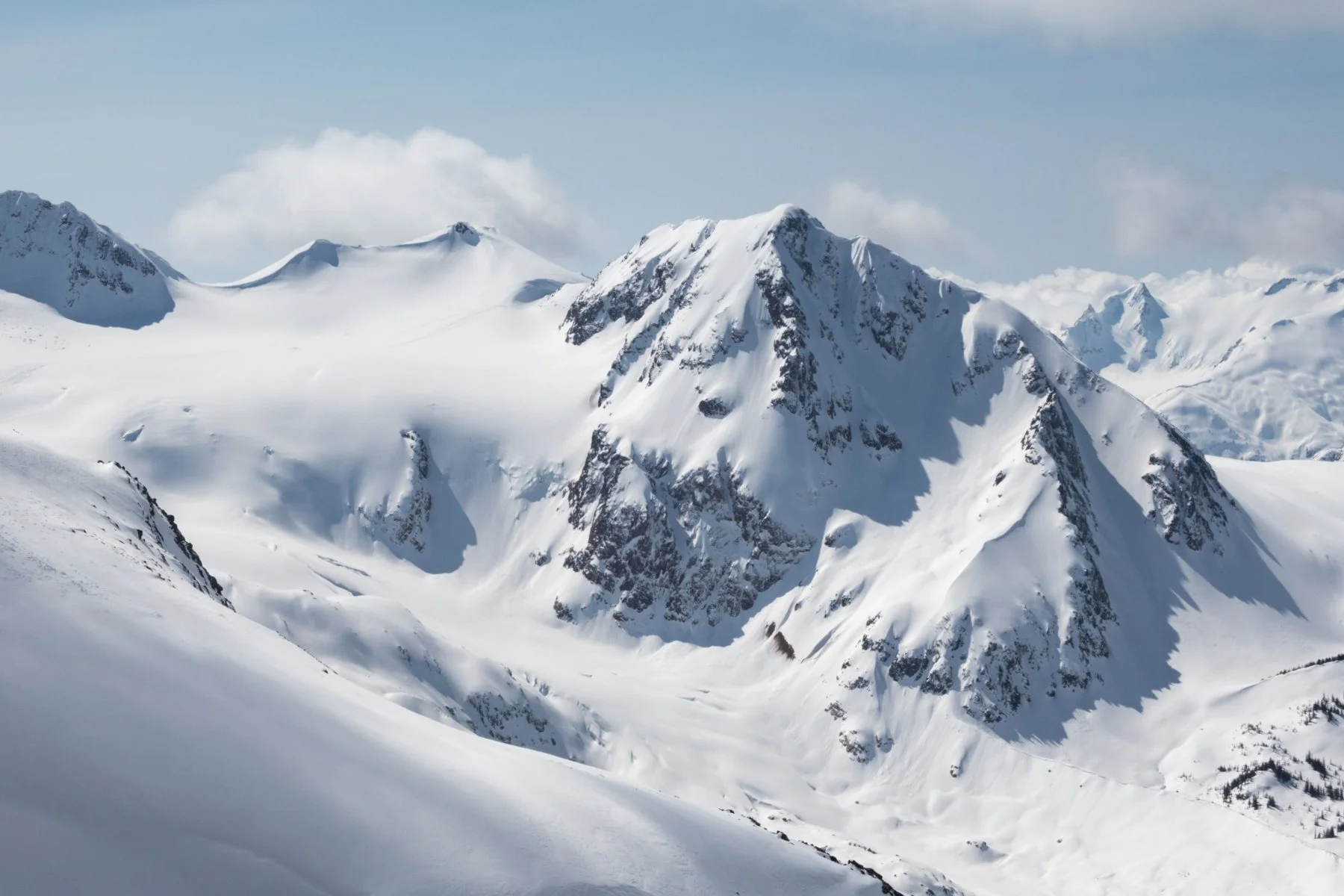
It was a bustling party at the backcountry gate, it seemed everyone was out to enjoy a clear day with fresh snow. A few speedy groups were already skinning toward the col and we quickly followed suit.
Sander skinned ahead while I stayed back and tried to maintain my “slow is smooth, smooth is fast” pace. This was going to be the longest day I’ve had in the backcountry mileage wise, and I knew I needed to carefully pace myself to avoid the dreaded bonk.
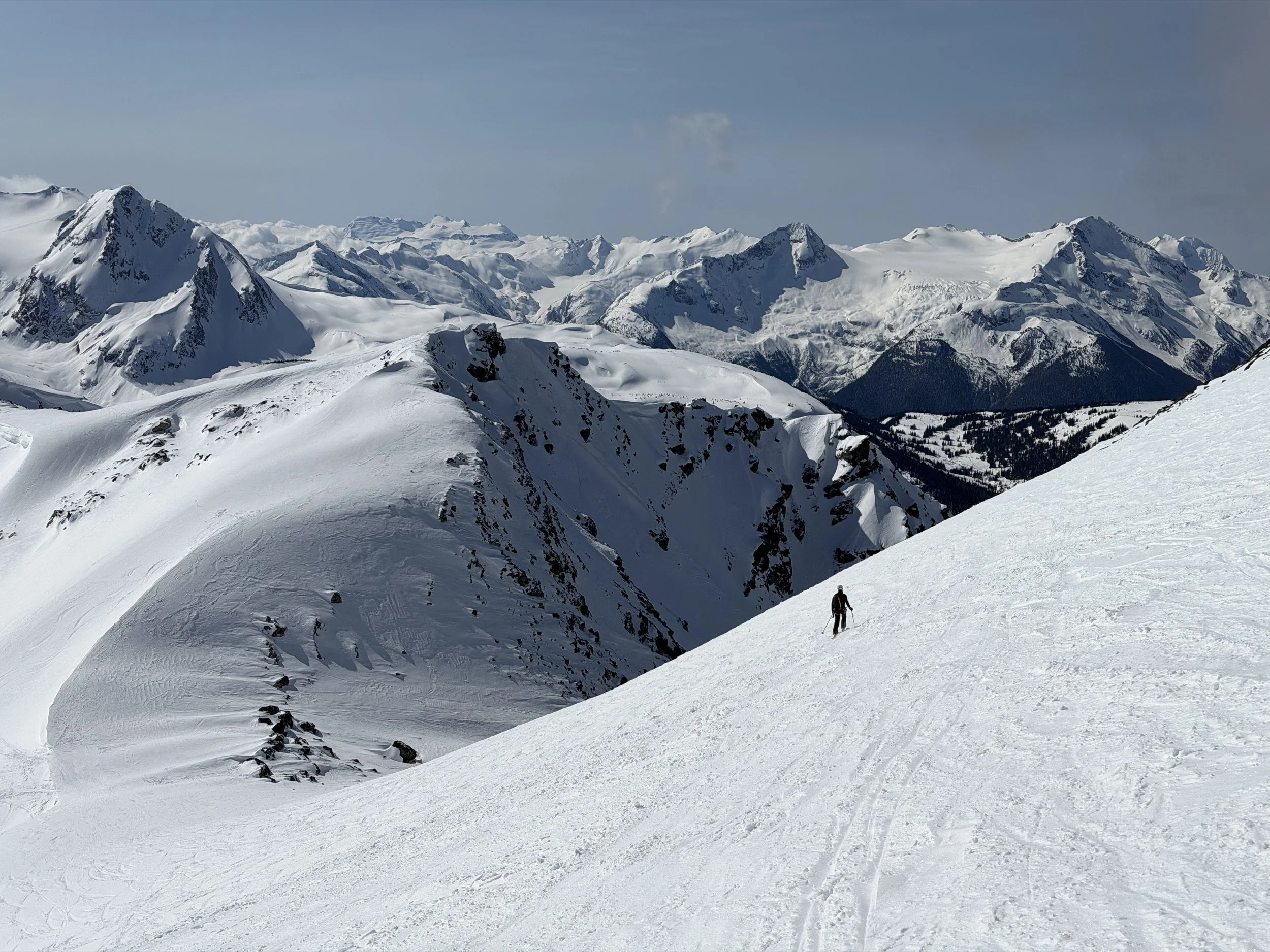
Sander descending from the East Col
We made it to the East Col in good time, quickly ripped skins, and transitioned to downhill mode for our descent toward Decker Lake. Our plan to minimize transition times was to rip skins and immediately start skiing on all downhill transitions and then take a short water and snack break at the bottom. To avoid losing time to layering/delayering and changing gear, I chose to wear my helmet at all times. I also brought my soft shell and wore it over my sun hoodie. It turned out to be the perfect layering system because I didn’t take it off or add a layer until after sunset, which was great for keeping my transitions dialed.
The beauty of the traverse was obvious in those first few turns. The Garibaldi Provincial Park, as I had just learned a few weeks prior, is a land of superlatives. The mountains, the glaciers, the terrain, they all felt larger than life. Every direction we looked we were graced with views of glaciated peaks sparkling under a blue sky.
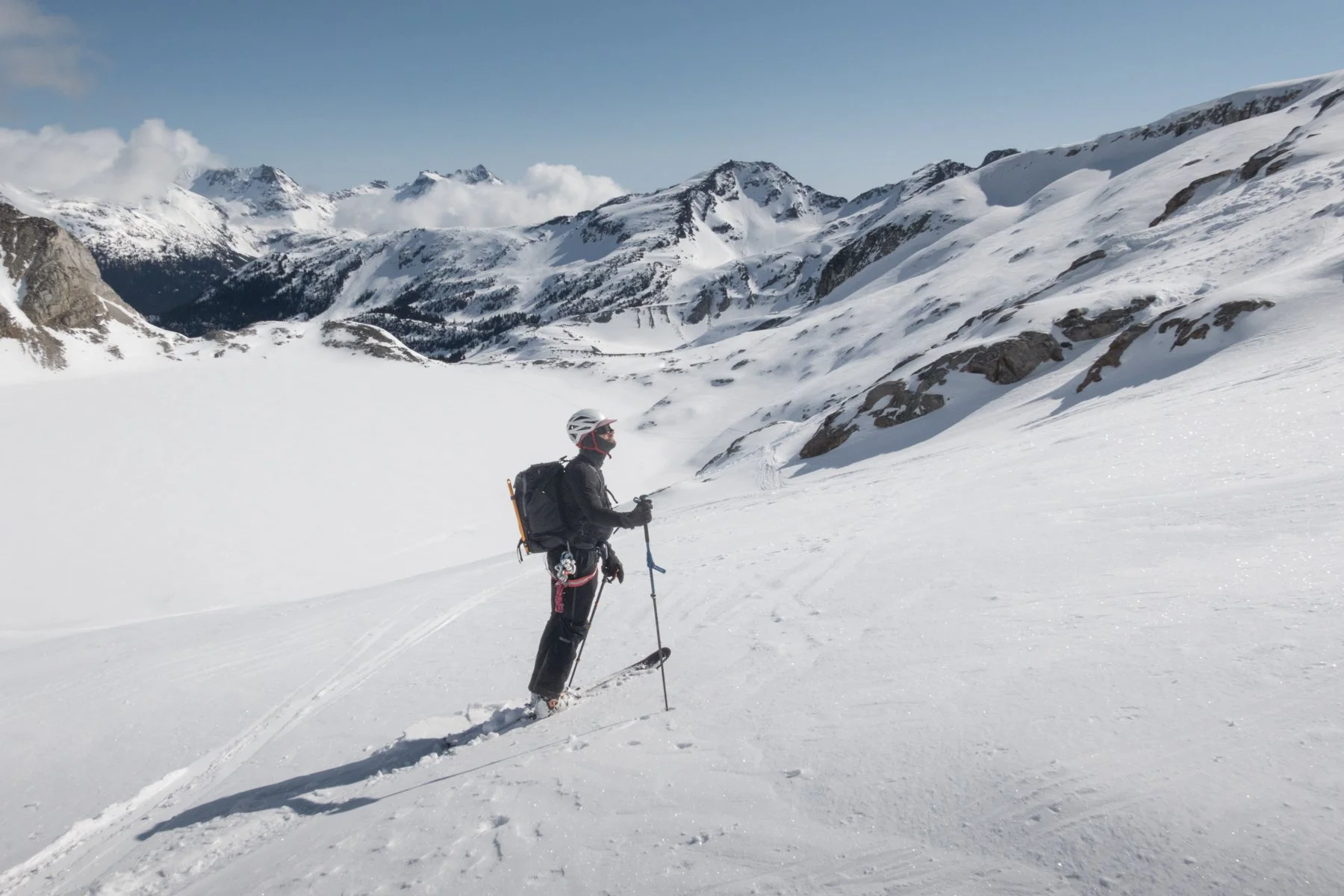
Sander above Decker Lake
Another way to save time and minimize elevation gain and transitions on this traverse is to always take the upper traverse when given the option, so we chose to take the upper traverse around Decker to avoid dropping all the way down to the lake.
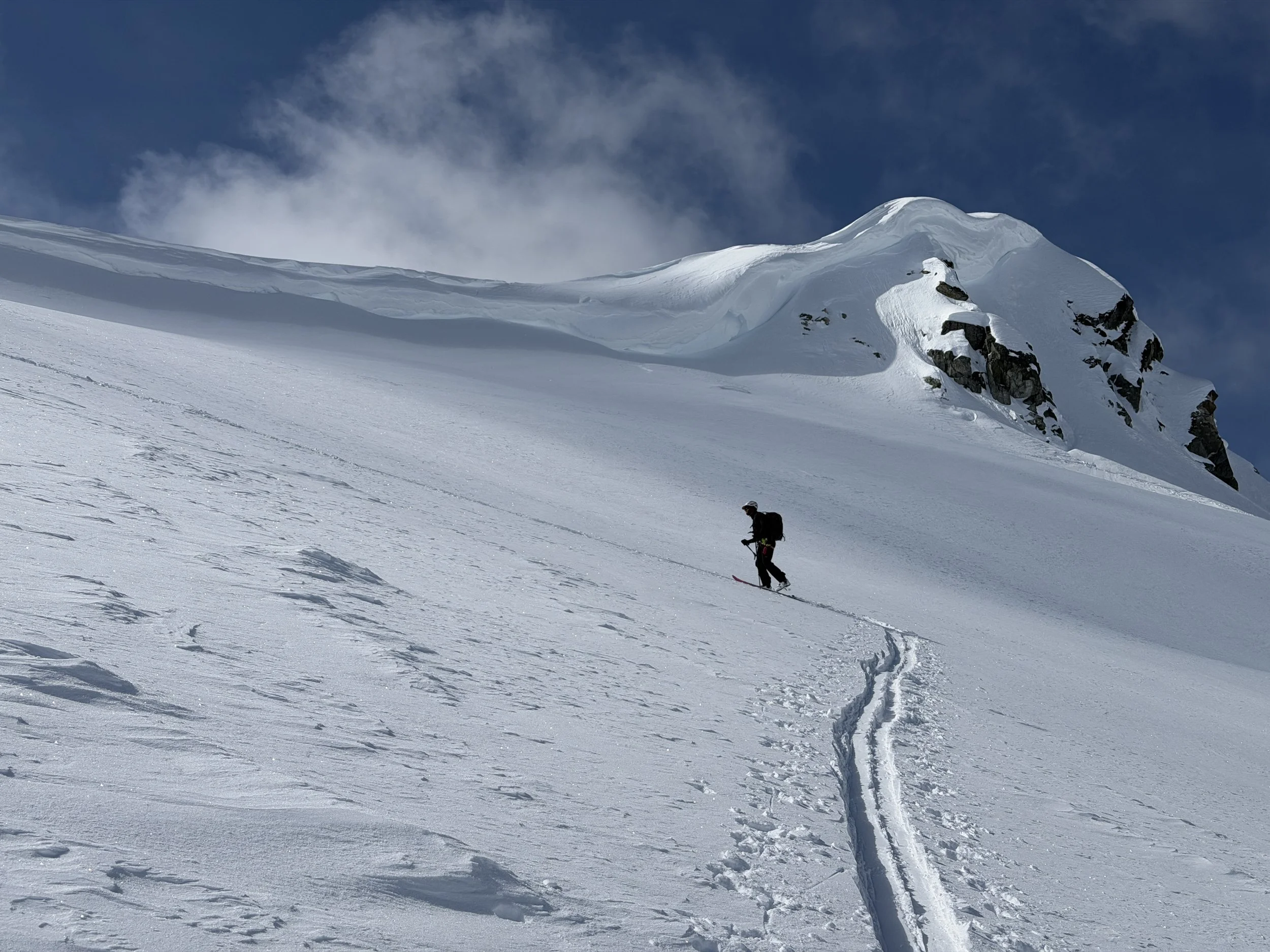
Sander taking the high traverse on Decker, being mindful to give the cornices a wide berth
From the highpoint on Decker we had some annoying downhill skinning to do to reach the Trorey-Decker Col. We could have taken our skins off and properly skied, but in our attempt to minimize transitions we skinned downhill along the ridge, and then continued along the upper traverse around Mount Trorey (also still on skins).
The Spearhead Traverse is truly a traverse in every sense of the word. A vast majority of the route (if you don’t go on any side quests to ski nearby peaks) consists of skinning slightly uphill, then skiing slightly downhill for far too short of a time until you reach the next low point and skin slightly uphill yet again. Rinse and repeat.
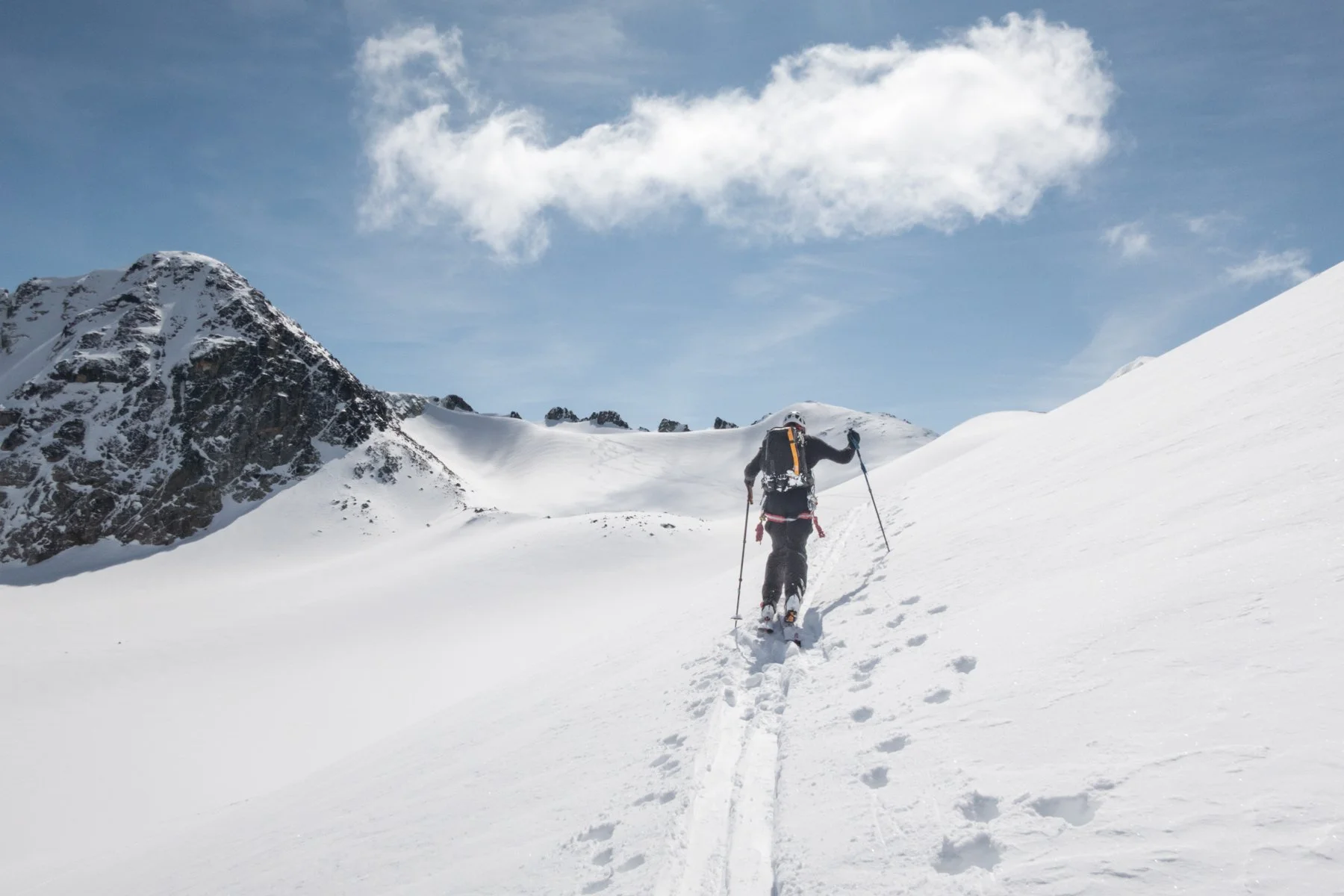
Traversing around Mt Trorey, aiming for Mt Pattison’s south ridge
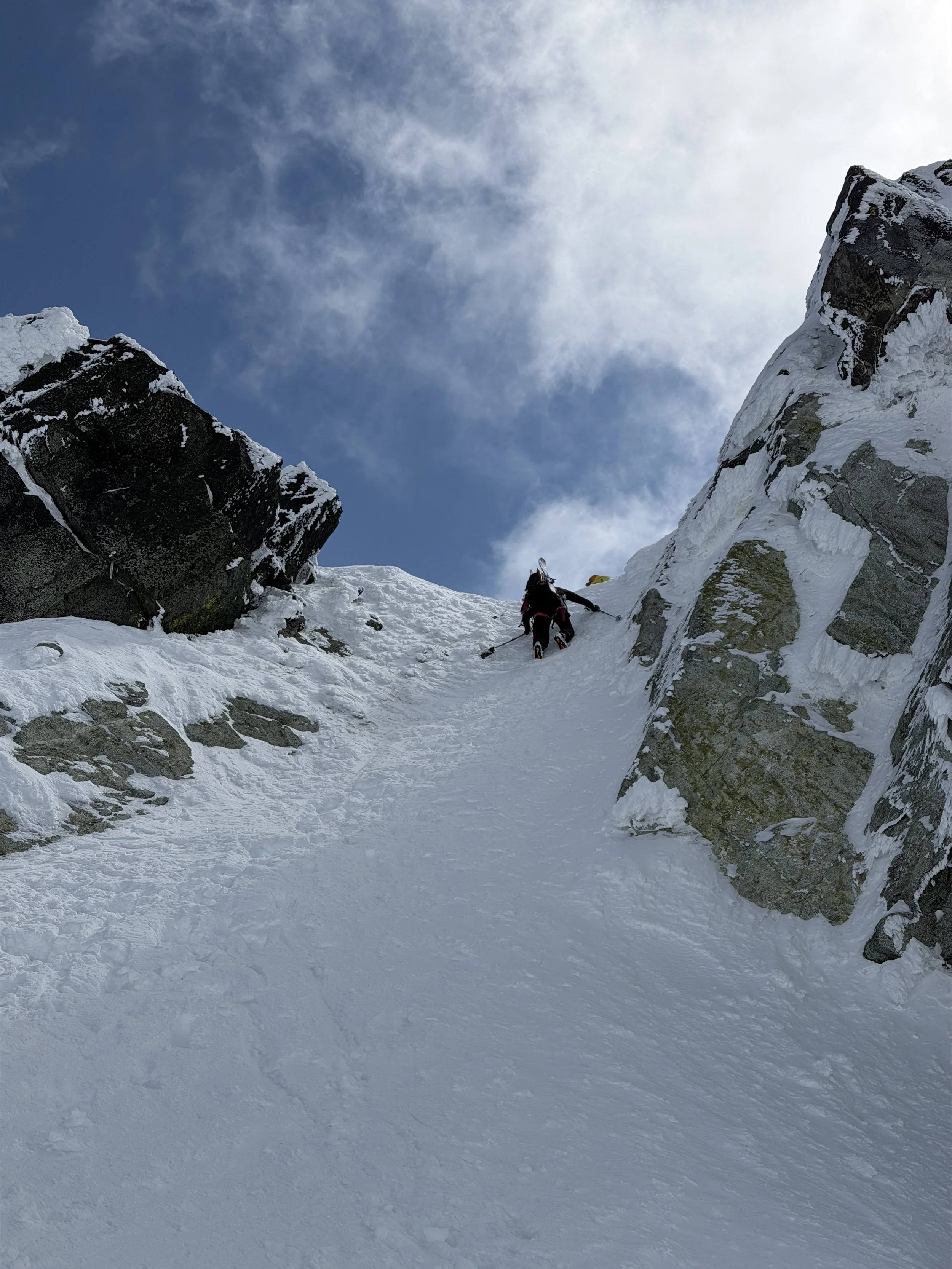
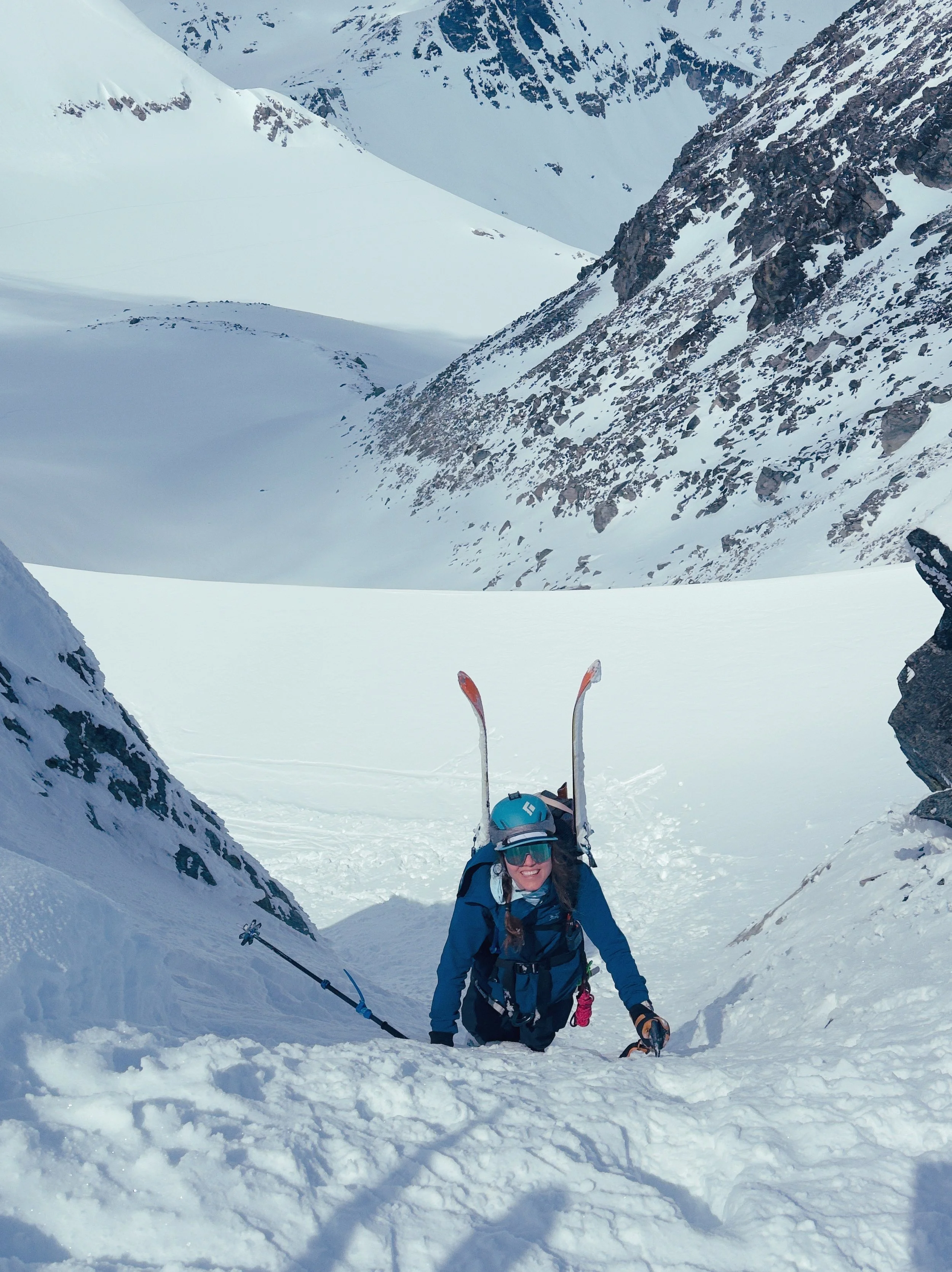
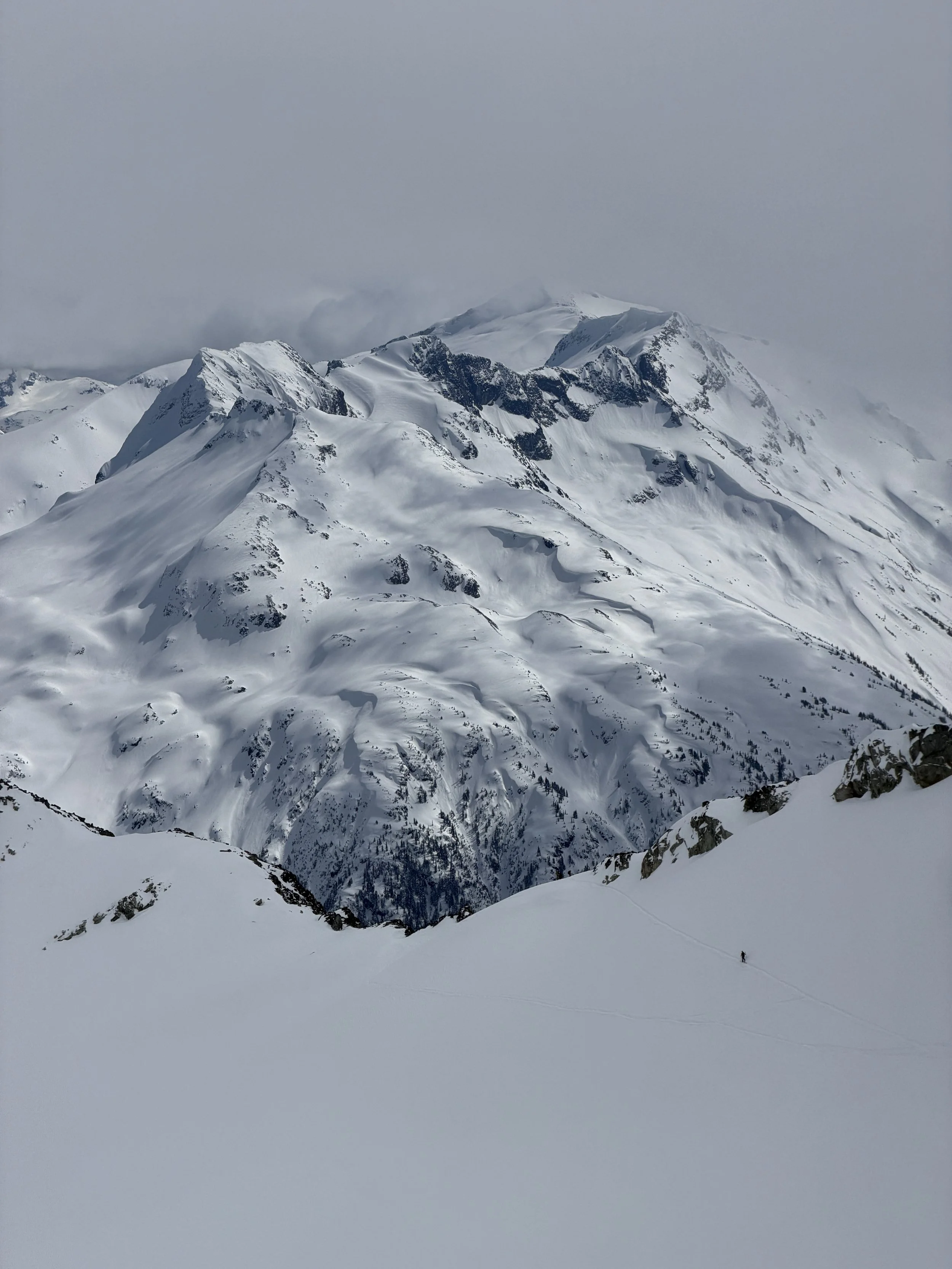
We enjoyed our next downhill ski after completing the short bootpack to the south ridge of Mount Pattison. This vantage point gave us a great view of the remainder of our route too. From the ridge, we could see the Overlord Glacier and Fissile Peak far across the valley. These were landmarks we would reach toward the end of the day, but for the time being they seemed a world away.
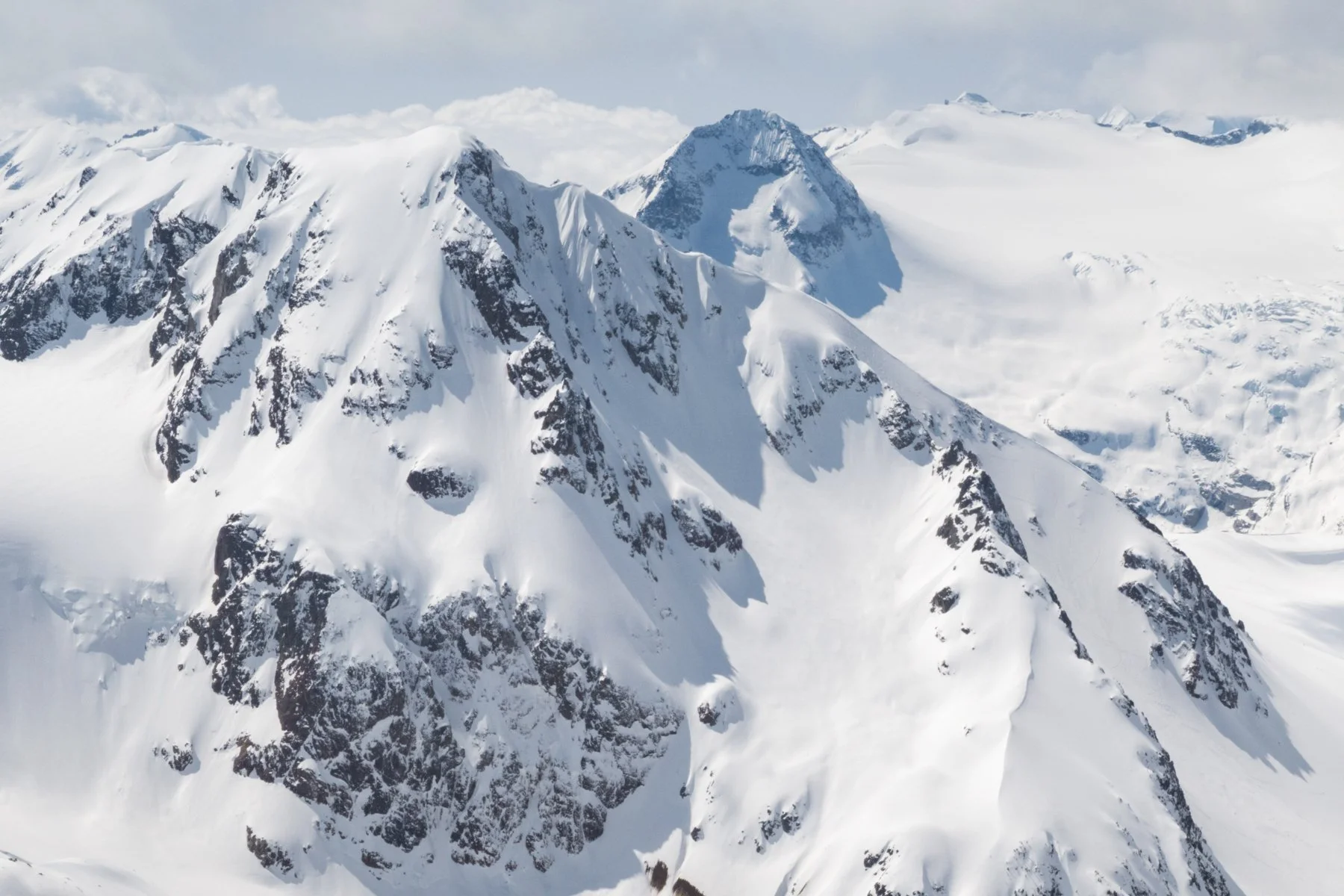
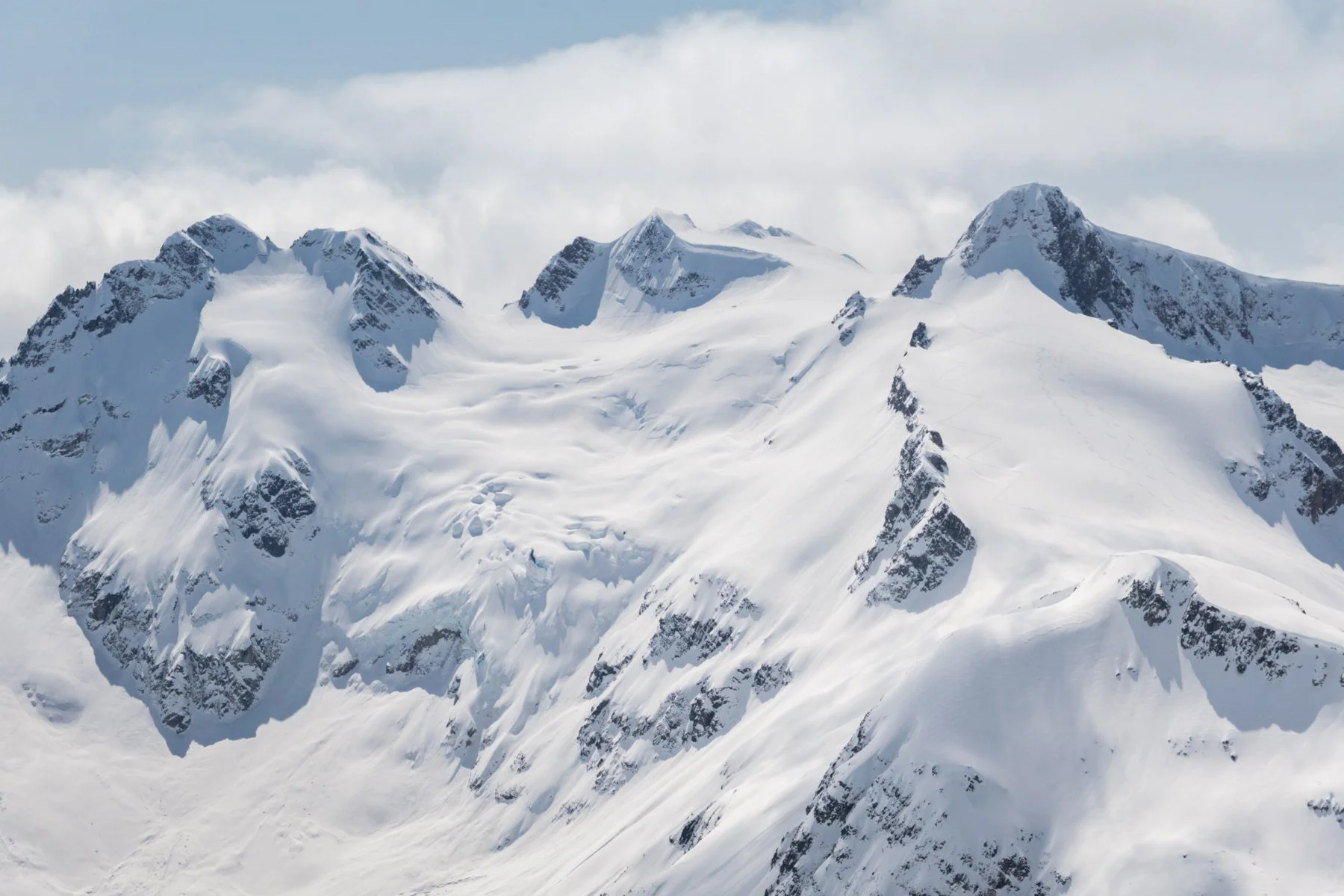
The downhill was short lived and soon enough we began the ~900’ climb to the Tremor Col. I looked at my watch. It was 12:45PM. Making our 1:30PM cutoff time was going to be a race against the clock. We fell into line behind a group of four and a group of two. We would end up, more or less, skiing with the group of two until the Kees and Claire Hut, as we inch-wormed our way through the mountains together. We’d always complete our ski descent just as they were transitioning and starting to go up hill again.
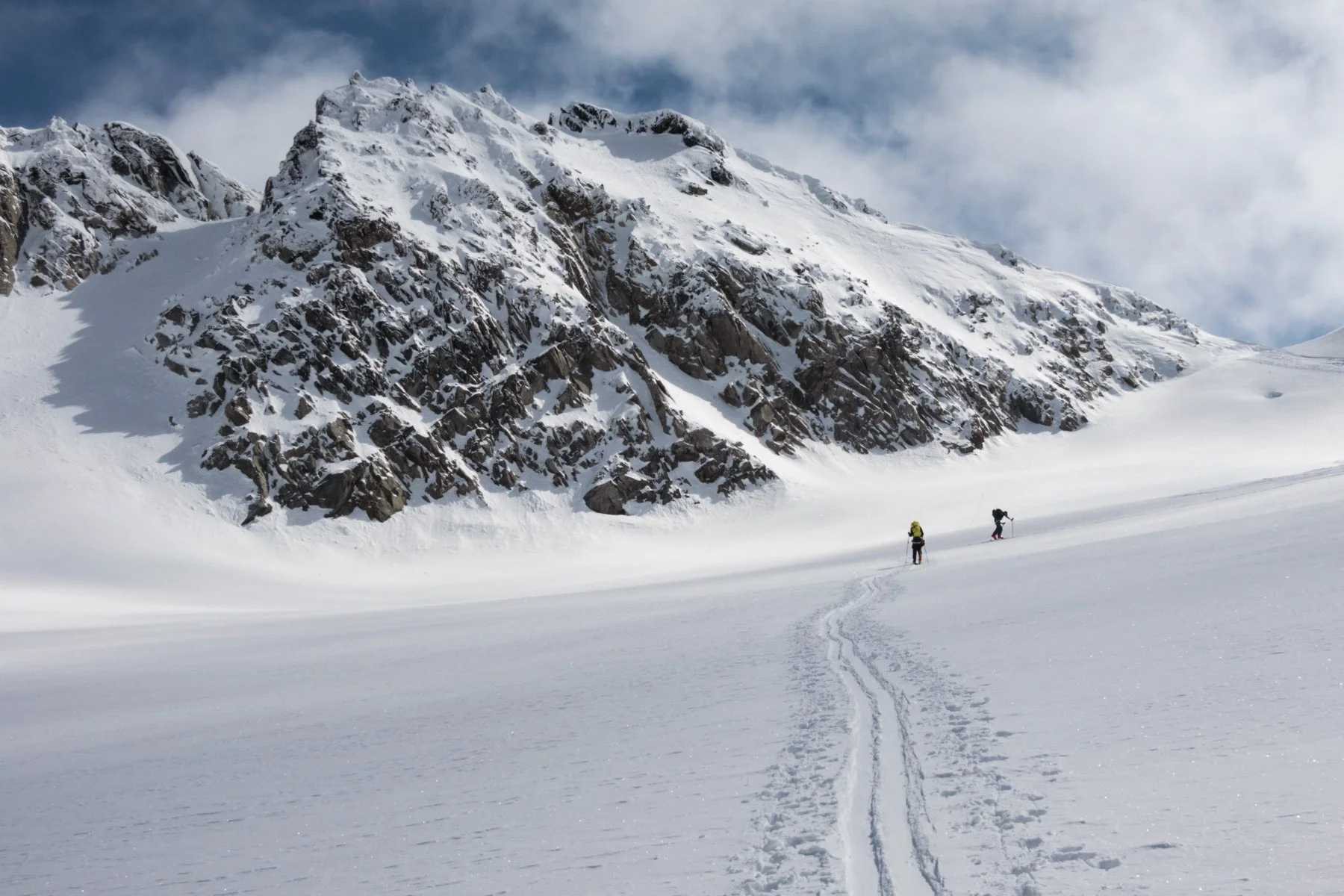
Skinning up toward the Tremor Col
On the climb, we were in full exposure of the sun without any wind to offer a reprieve from the heat. I felt my energy rapidly depleting. I made an effort to refuel and drink water, but the heat was beginning to drain me.
We made it to the col at 12:25. We just made our turnaround time. We took a quick snack and water break, already throwing out our rule of no breaks before a downhill ski. After the long climb in the hot sun, we needed it. As we drank and ate, we worriedly watched a cloud bank roll in from the south. Some clouds had been in the forecast, but these looked lower and thicker than expected. These were mountain-eating clouds, which are the last clouds you want to see while on a glacier.
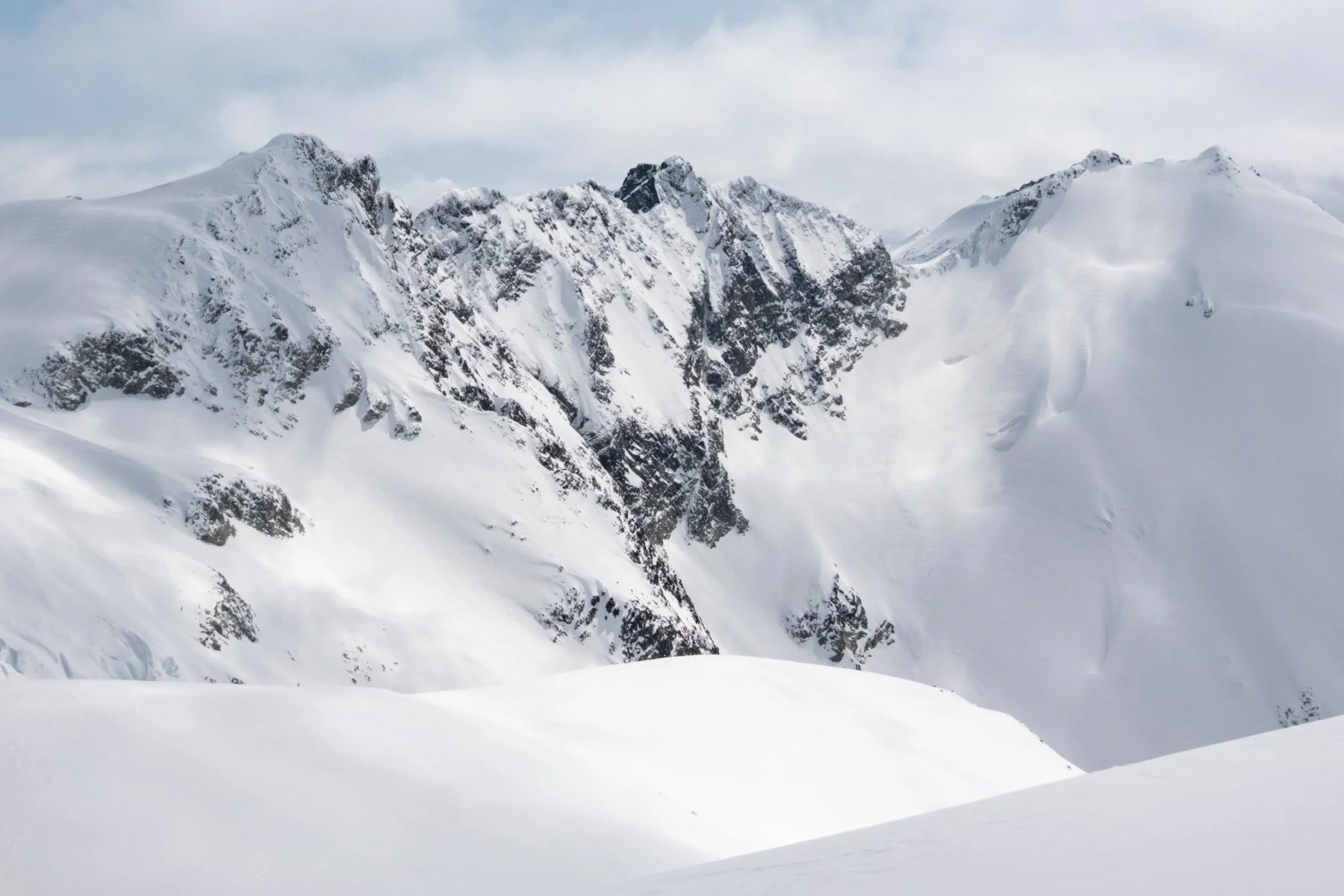
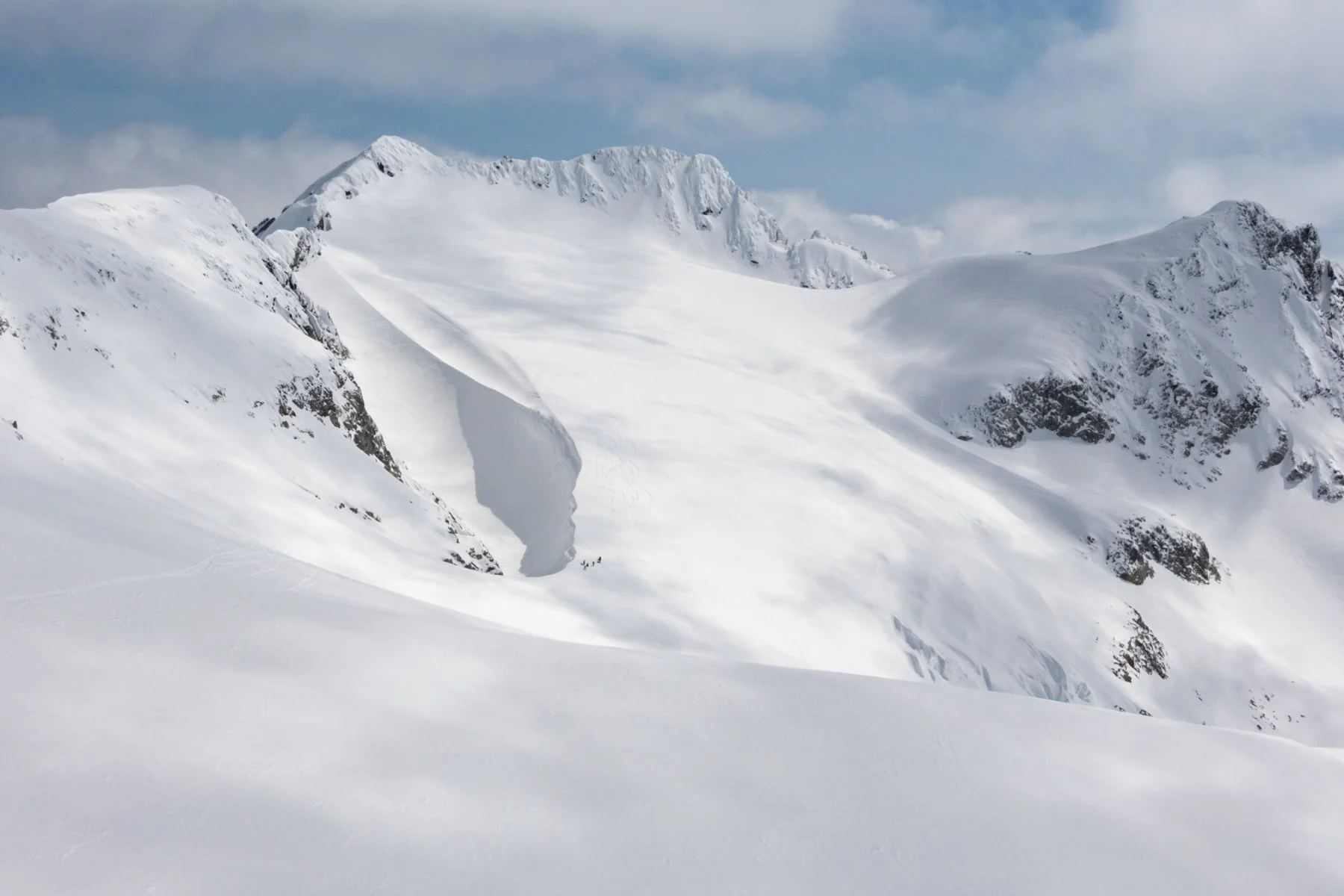
We relished another quick downhill ski as we made our way toward the Wind Scoop. The downhill portions of this traverse were always too short and before we knew it we were at the low point again. We transitioned and started skinning toward the Quiver-Ripsaw Col. It was along this stretch that the clouds completely engulfed us. Suddenly, we could barely see the group right in front of us.
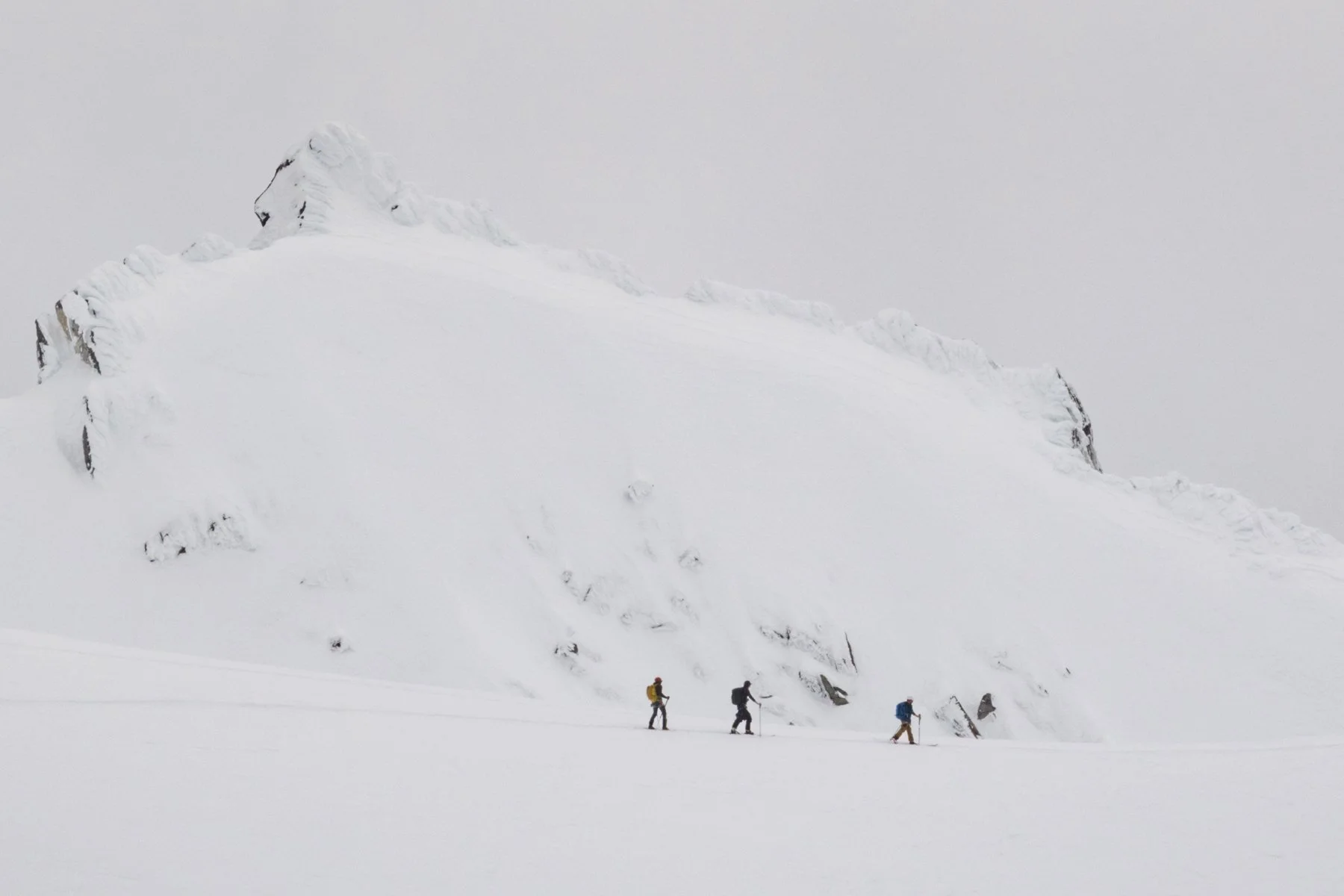
We almost ran smack into the group ahead of us just as they were transitioning to ski down the Ripsaw Glacier. The visibility went in and out, one moment it would peel back and reveal the entire slope ahead of us, and the next moment it would swallow us up again and we could barely see our hands in front of our faces.
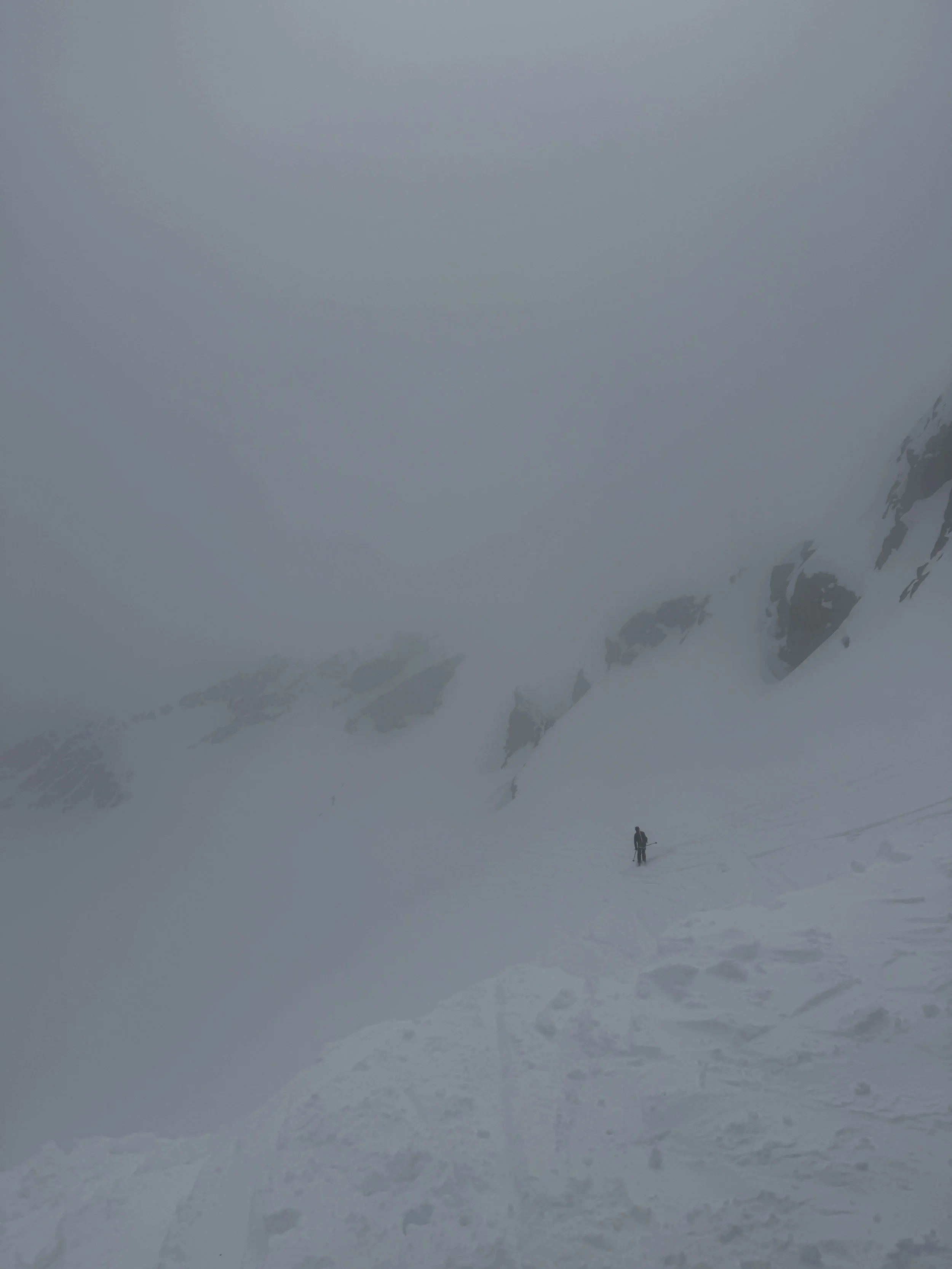
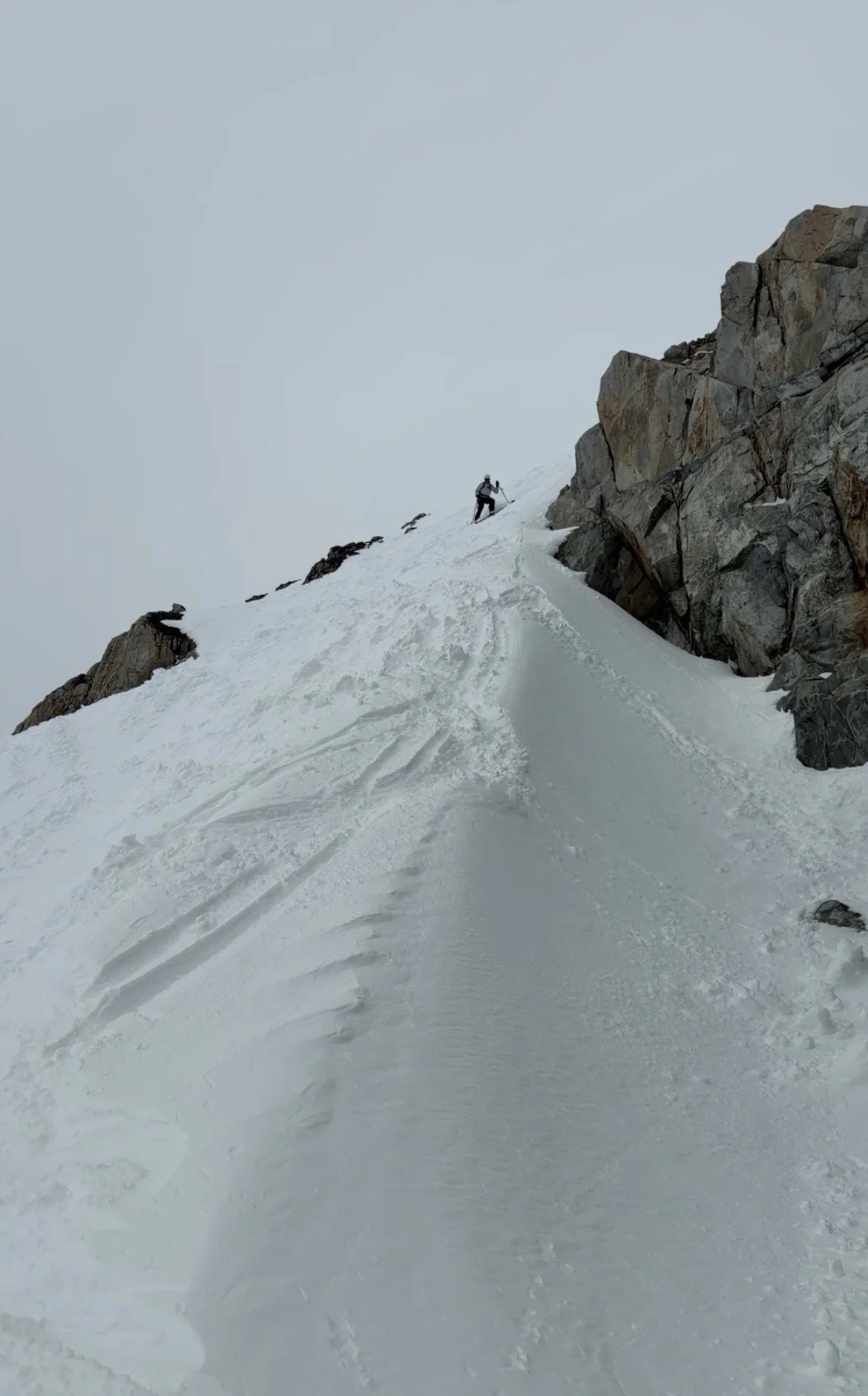
Sander skiing down the farthest right access route onto the Naden Glacier
In brief moments the clouds lifted enough for us to see our route down the Ripsaw and we hurried down the slope.
Next up was one of the cruxes of the trip and one of the moments I was most apprehensive about: accessing the Naden Glacier. There are three different ways skiers can access the glacier and all of them have their pros and cons. We chose the skier’s right access route, which involved a little booting above exposure, clicking into our skis in a precarious spot, and skiing down a short but steep chute onto the glacier. It ended up being much more straightforward than I expected and I breathed a sigh of relief when we made it onto the Naden.
We kept our speed for as long as we could and when we ran out of steam, we transitioned back to uphill mode as we headed toward the Macbeth-Couloir Ridge Col. The visibility had thankfully improved, the cloud ceiling rose and we had no issue seeing the terrain ahead of us. I was also thankful for the respite from the sun since my energy levels stabilized in the cooler temps.
From the col we enjoyed a short fall line(ish) descent on the Macbeth Glacier, again maintaining our speed for as long as we could. We ended up booting the ridge. One of the men in the group in front of us skinned and it looked manageable, but since the ridge had steep drop-offs on either side, I preferred to boot. We clicked back into our skis and started skinning the high traverse on the Iago Glacier, aiming for Iago’s east ridge, where we transitioned to ski down the south side of Iago.
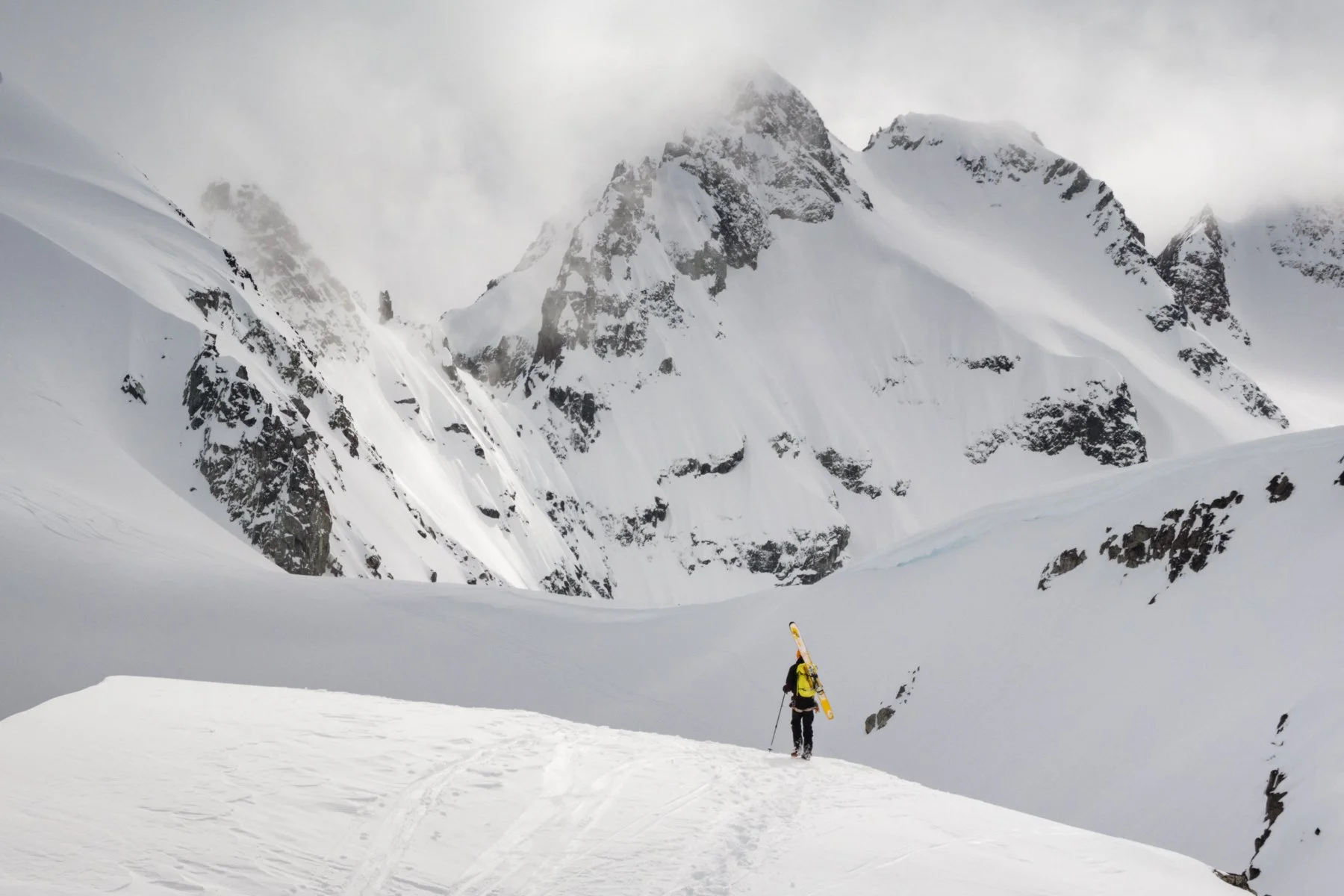
Booting along the ridge, Fitzsimmons in the distance
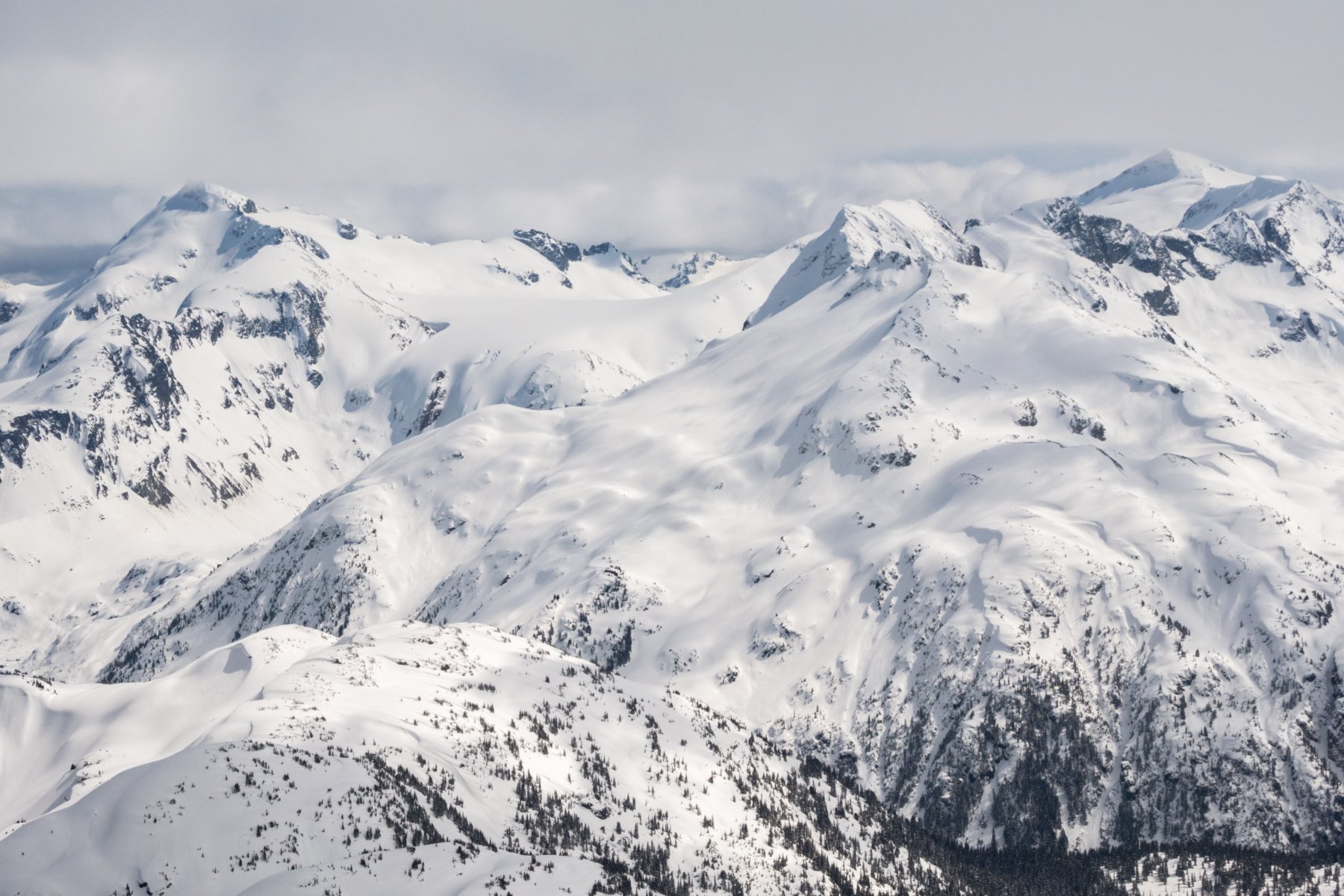
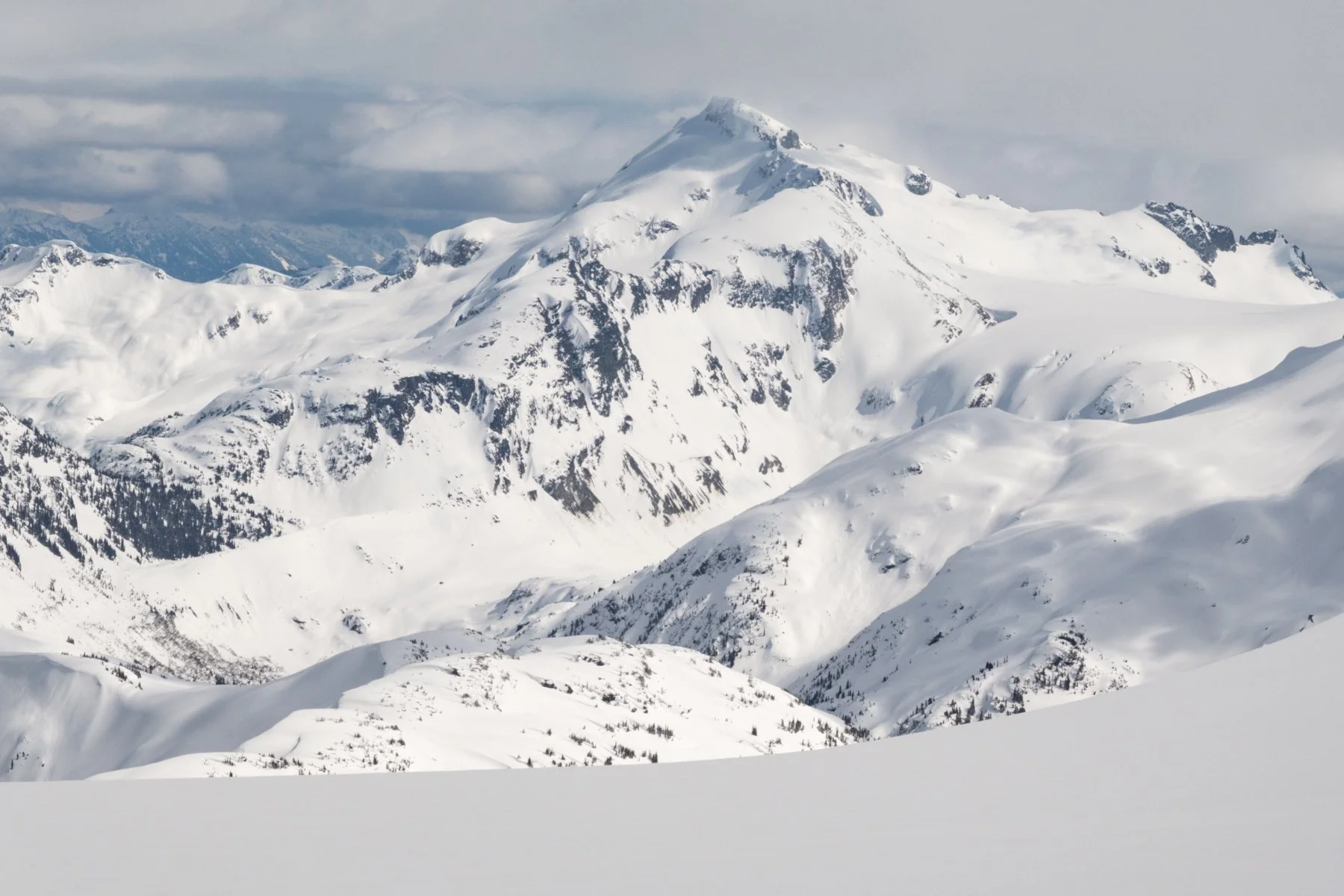
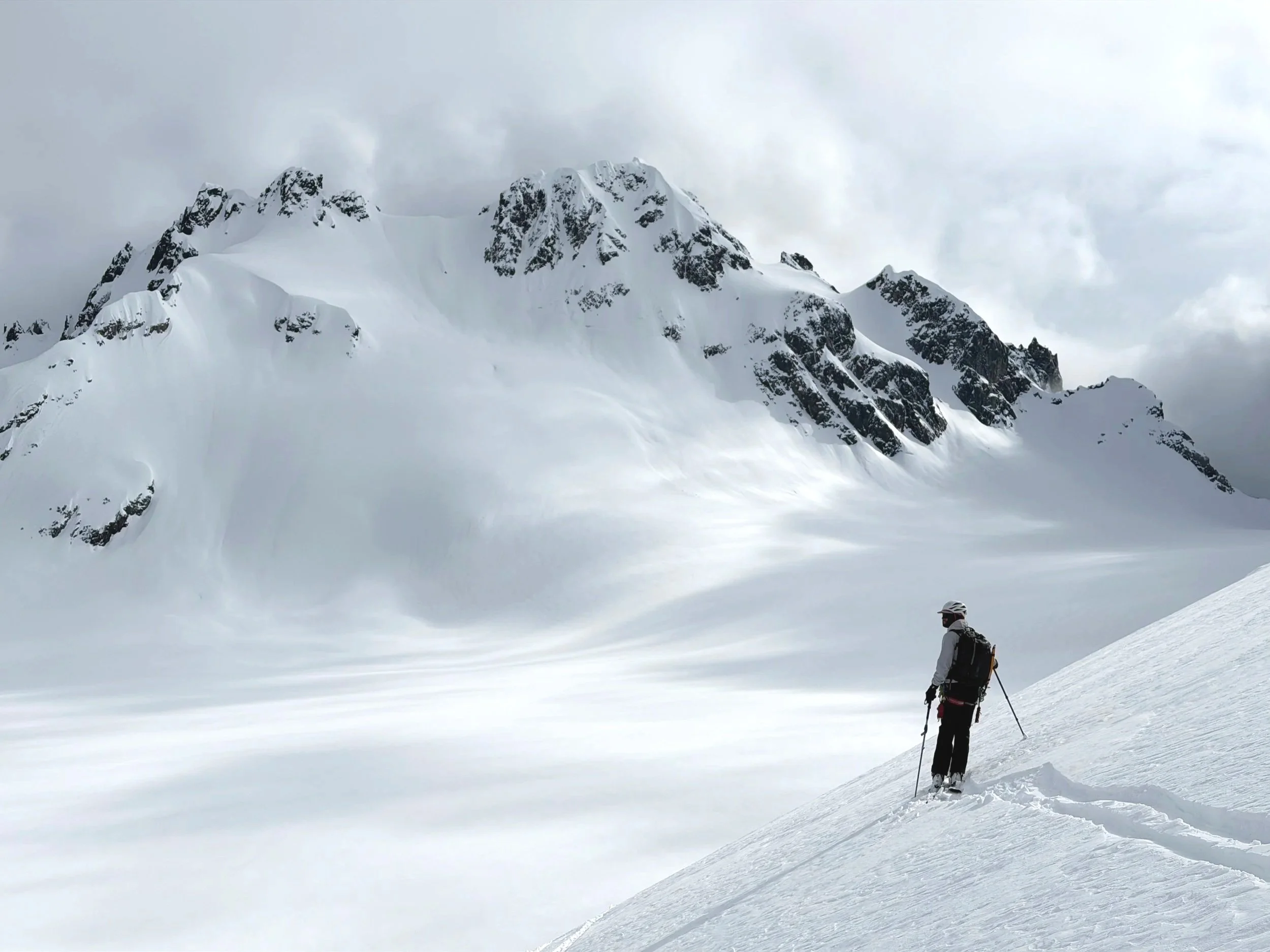
Sander nearing the end of the descent on Iago’s south side, Cheakamus Mountain in the background
This descent was a low point of the day for me. The south facing slopes had developed some of the worst breakable crust I’ve ever skied. I was on my ultralight 85mm skis with my ultralight boots and I had to fight for every turn. Completing ignoring everything I’ve ever known about skiing, I threw my entire body into each turn, trying to muscle my way through the crust and heavy snow. Ever so slowly, I made it to the base of “heartbreak hill”, a 900’ climb to the Benvolio-Fitzsimmons Col. It was readily apparent how this climb earned its moniker. The climb wasn’t terribly steep or long, but it felt endless on tired legs.
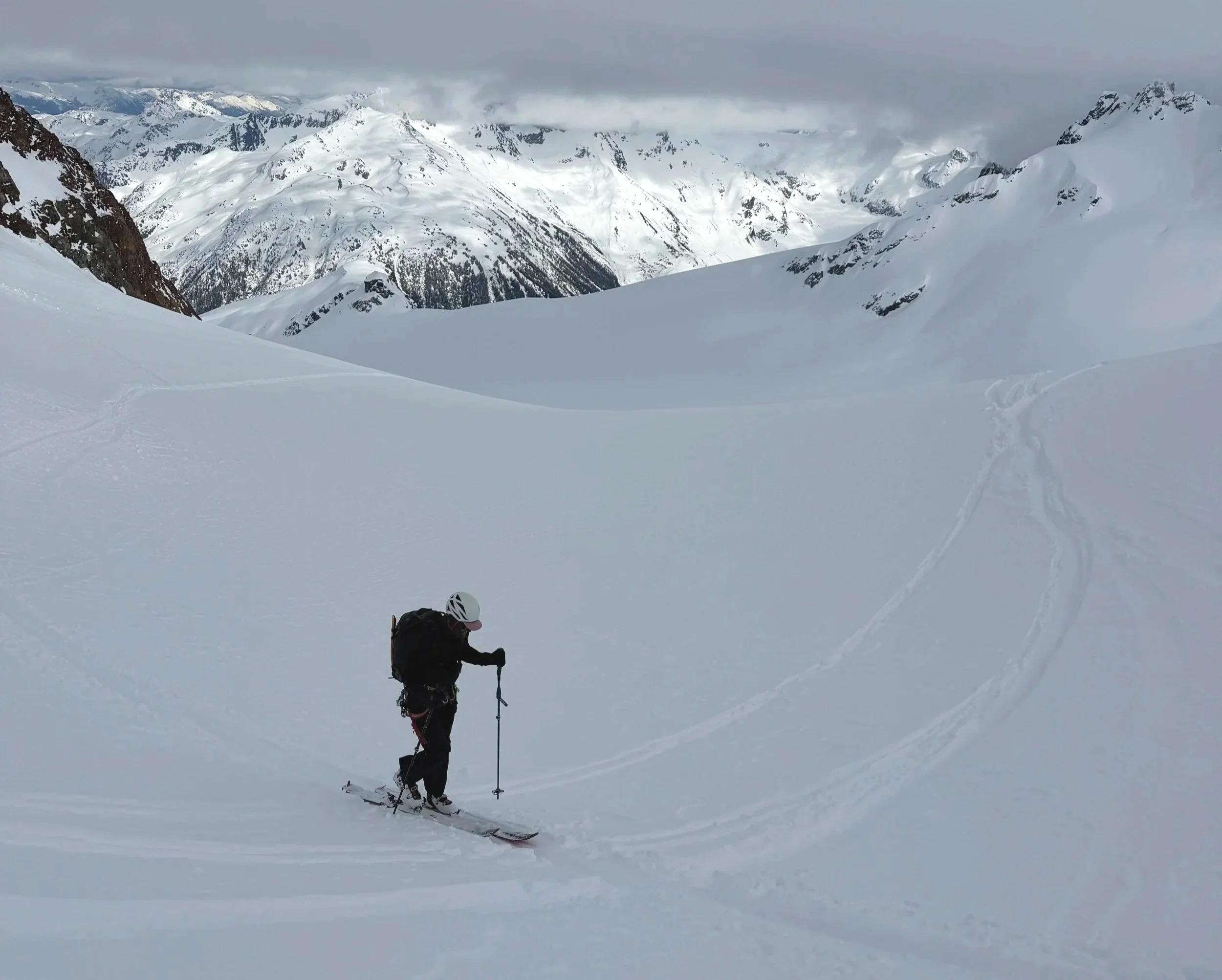
Sander skinning up “heartbreak hill” toward the Benvolio-Fitzsimmons Col
From the col, we kept our skins on and stayed high as we traversed toward Overlord Mountain.
There were two options at Overlord Mountain. The traditional route descends onto the Overlord Glacier by way of a rappel. This minimizes the elevation gain, however it also bypasses the only north facing run on the route. Since skiing a north facing run in fresh powder sounded like way more fun than rappelling and traversing, we chose to ski. And I am so glad we did. The run down Overlord Glacier was THE run of the trip. The fresh snow had stayed cold and we enjoyed nearly 1,000’ of it. The tradeoff was that we had to endure a longer ascent to the Fissile-Whirlwind Col, but it was well worth it.
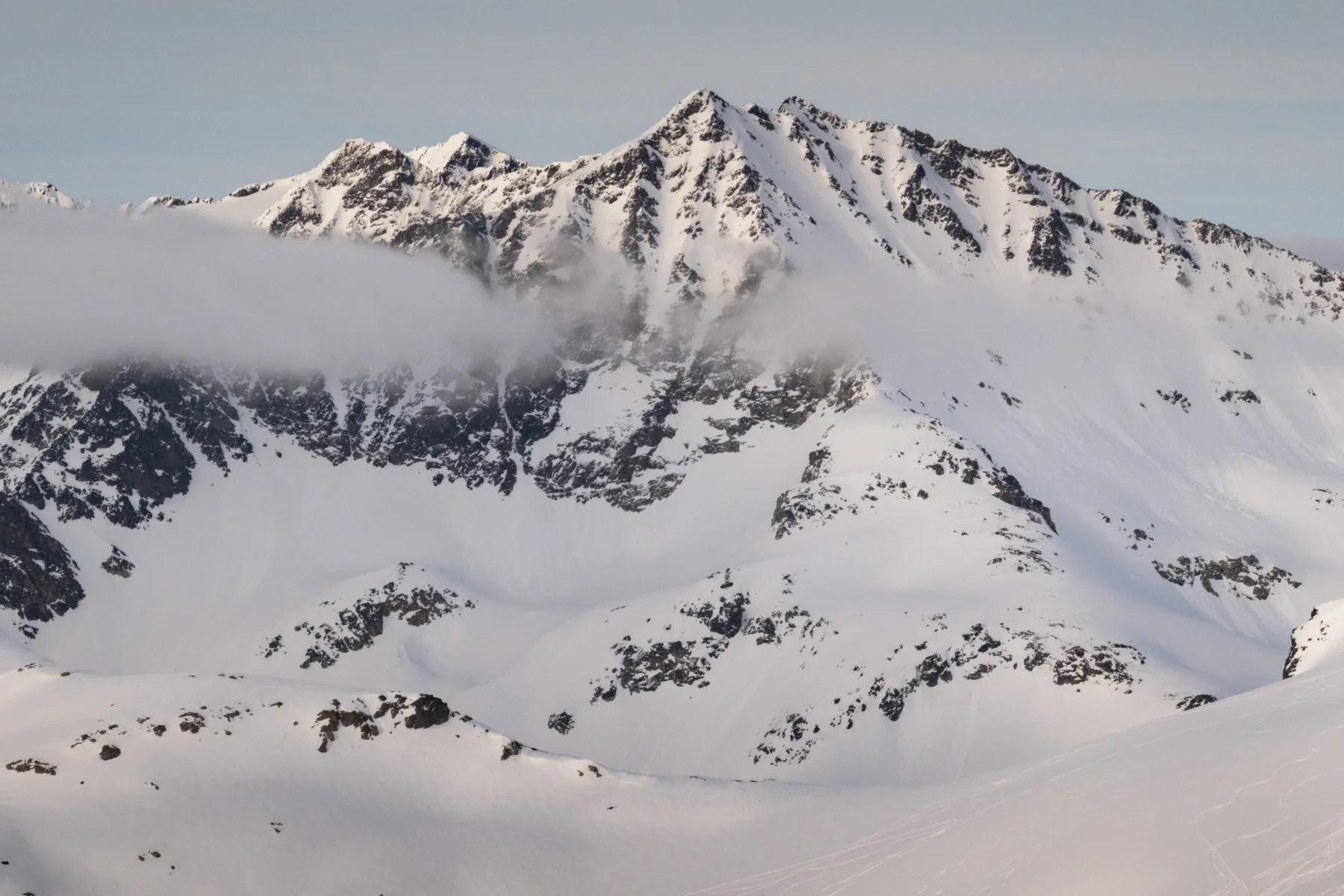
We made it to the Fissile-Whirlwind Col as golden hour started to paint the horizon in a soft golden glow. We could see the Kees and Claire Hut below us, looking tantalizingly close. In a way, it felt like the end of the traverse since we were out of the most consequential terrain, but in reality we still had a long ways to go.
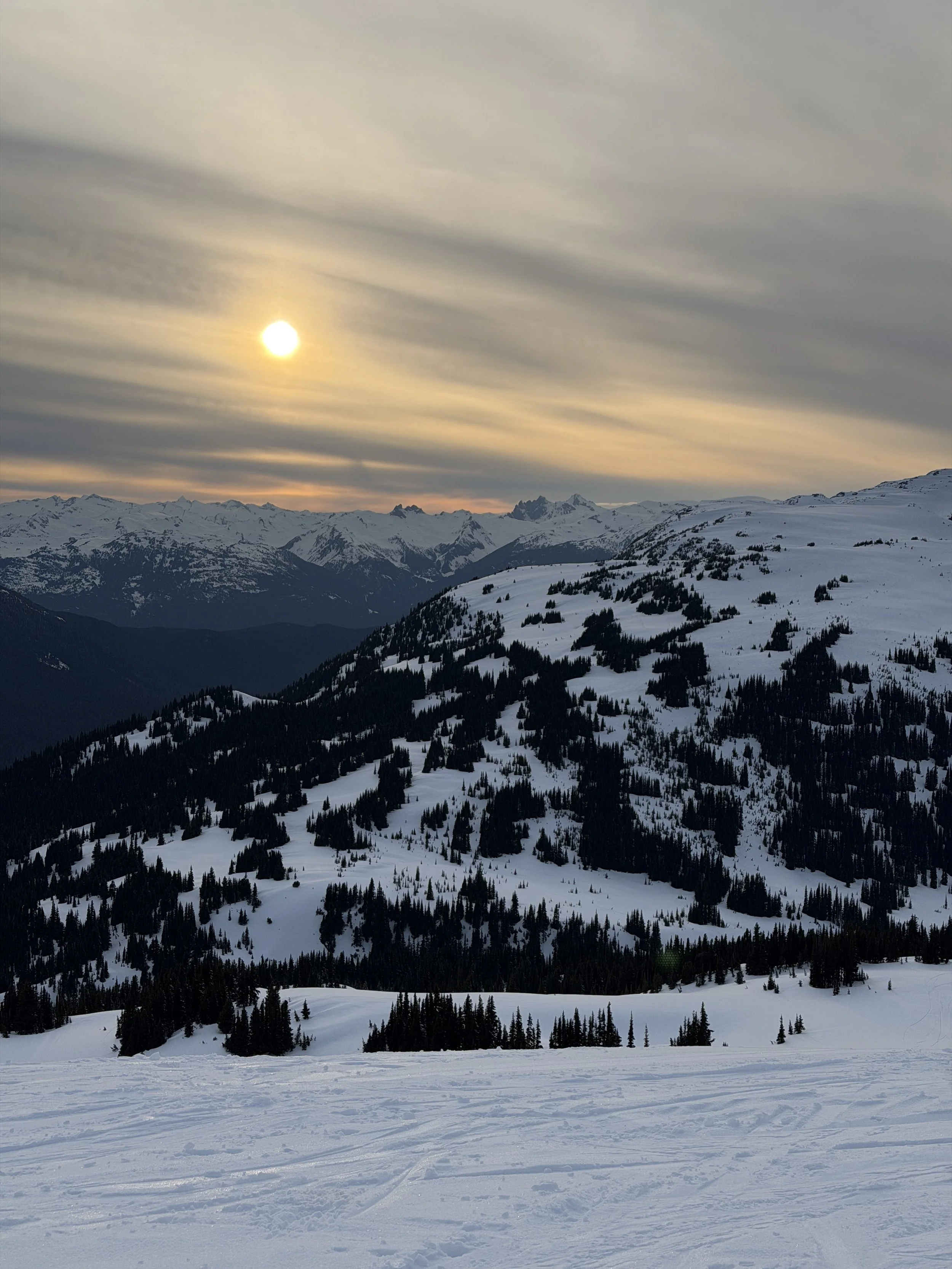
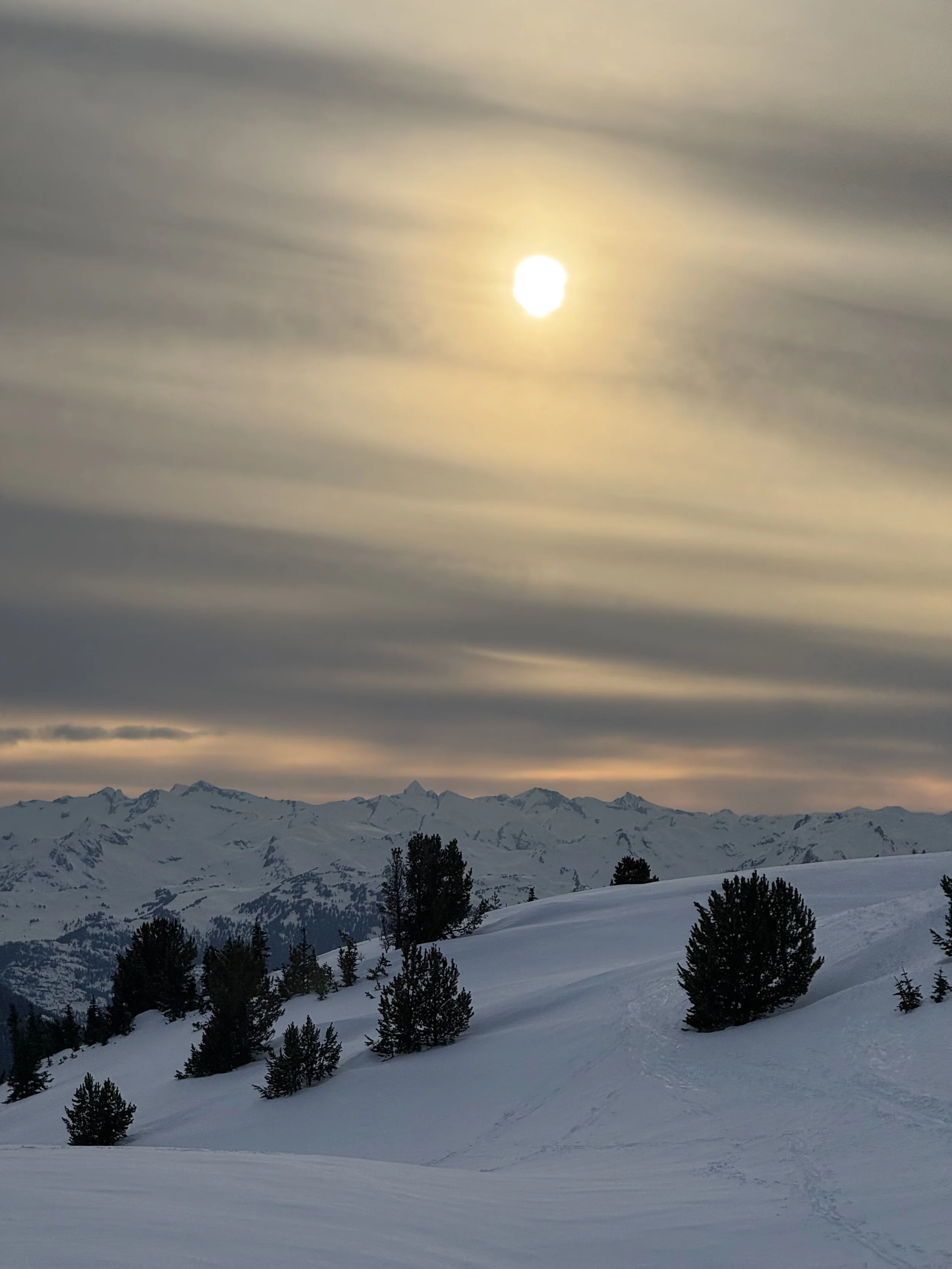
The run down to the hut was nearly as good as the run down Overlord, though a little more tracked out. While I badly wanted to peek into the hut, we were strapped for time. There was also a small part of me that thought if I went into the hut, I wouldn’t have the self-discipline to leave again. We continued to skin above the hut and transitioned for yet another descent.
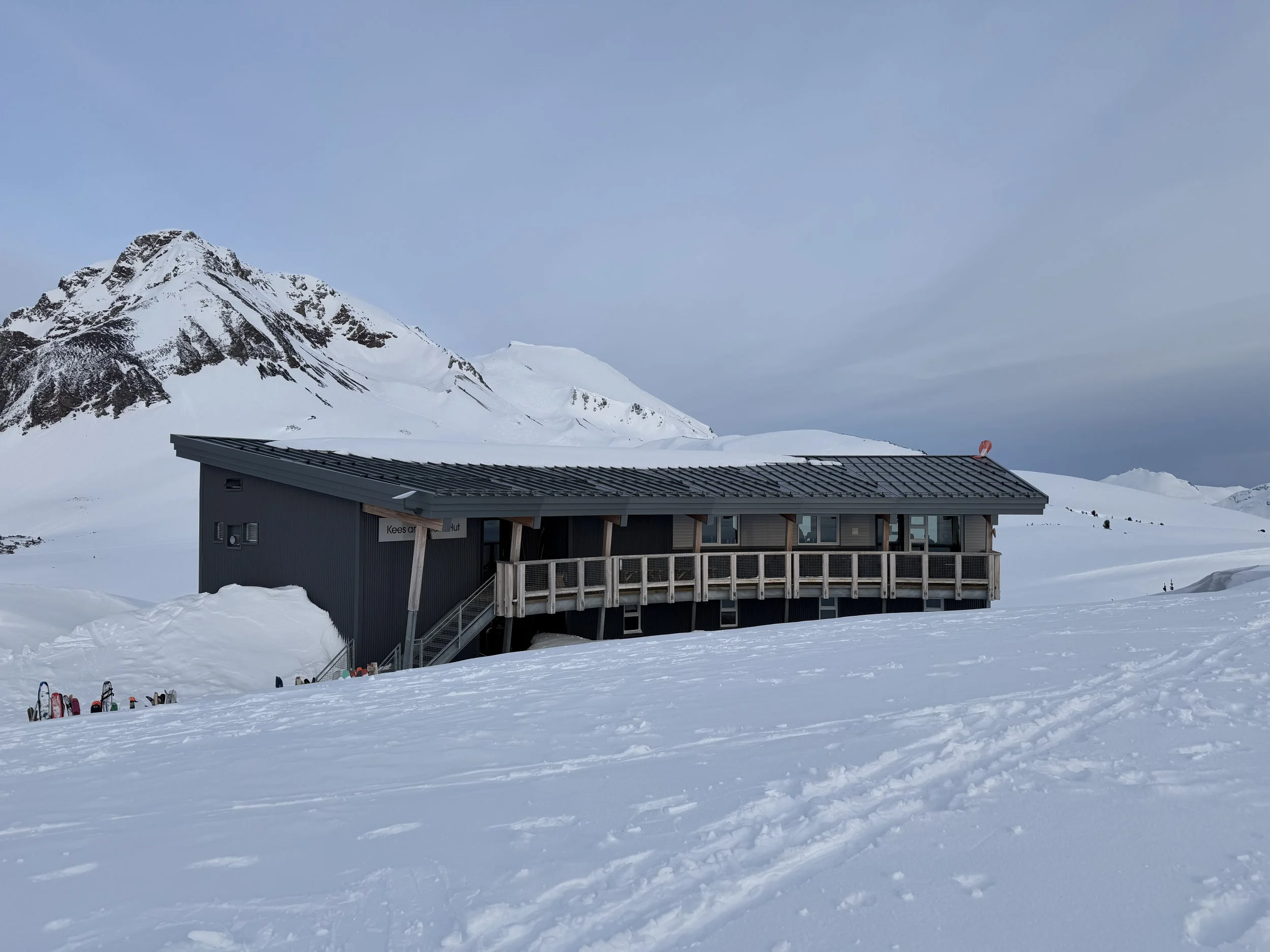
The Kees and Claire Hut looking mighty inviting as the light began to wane
If the snow level had allowed, this would have been the end of our ascents and we would have descended via the Singing Pass Trail to Whistler Village. Unfortunately, the snow level did not allow for that so we planned to exit via the Musical Bumps, which meant another ~1,000’ of elevation gain.
Blue hour descended upon us as we climbed to the Oboe summit, but I was determined not to put a headlamp on quite yet. Moving uphill at this point felt herculean, we had been moving for over ten hours with only the briefest of breaks sprinkled throughout the day.
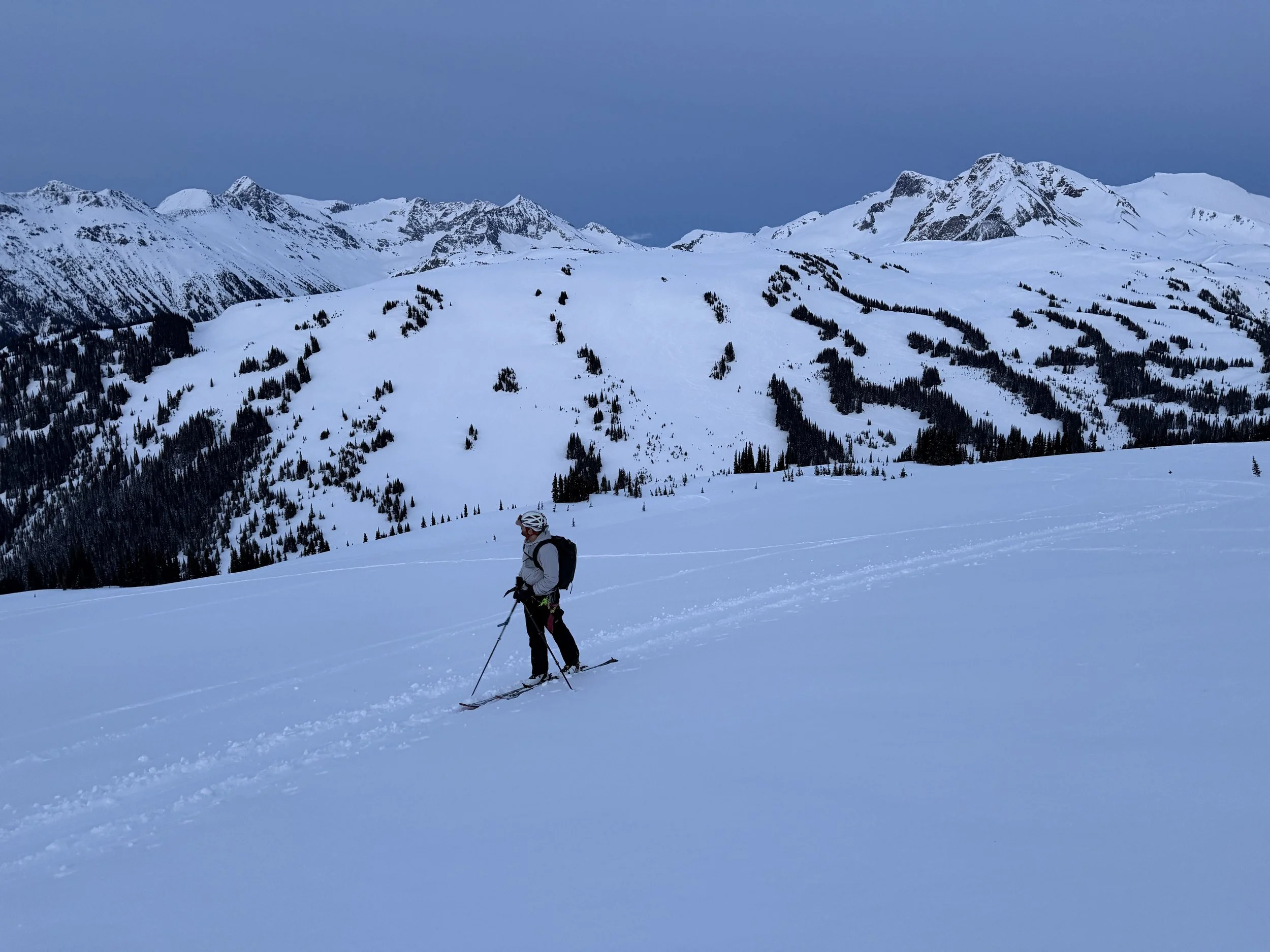
Blue hour just below the Oboe summit
We made it to the Whistler boundary and the entrance of the Flute Bowl at dark and I accepted it was time to put on my headlamp. Skiing the resort in the dark was surprisingly fun. With only a halo of light in front of me, I focused only on the two turns I could see, not worrying about whatever was cloaked in shadow beyond.
Finally, we began our the last ascent of the trip. Mercifully, it was a brief 100’ climb to the Burnt Stew Trail, a cat track that would take us another 3,400’ down to Whistler Village. It was around this time we realized we wouldn’t make it to the Village before the kitchens closed. It was just our luck that our friend Chris was in town to ski the following day, so Sander gave him a call. Chris was at an Irish pub and asked what we wanted to order. We simply answered, “burgers! Any kind!”
There was nothing more I wanted than to be at the Village, but it was still thousands of feet below us. Cruising down the cat track, watching the twinkling lights slowly draw closer really drove home how massive Whistler is. It just goes and goes!
As we neared the Village, the snow coverage got progressively worse until just 50’ from the pavement, the snow ran out. We took off our skis and hiked the last few feet. Chris was waiting for us at the bottom. He escorted us to the pub where we were confronted with a wild Friday night party scene after 12.5 hours on the Spearhead. I dug into my fries and burger as soon as my butt hit the chair.
The Spearhead Traverse was an incredibly rewarding experience. I’m so glad I did it, but I can confidently say I will never do it in a day again. It is a true traverse, with very little fall line skiing to be enjoyed. I often found myself looking longingly at mountain faces only to have to rush right past them on our tight schedule. However, I am looking forward to returning someday (maybe when the second hut is complete near Macbeth!), to spend at least four or five days in the area, skiing some of those lines we hurried by on this trip. The area is filled with endless mountains and drool-worthy ski lines and it felt like a shame to have to skip all of them on this trip. I already can’t wait to go back and experience this area in an entirely new way. And next time Alex will be able to join as well!